
Silverback Gorilla Strength: How Strong Are They?
Silverback gorilla strength captivates anyone fascinated by the wild. These majestic adult male gorillas lead their troops with unmatched power, making them symbols of raw primate might in the dense forests of Central Africa.
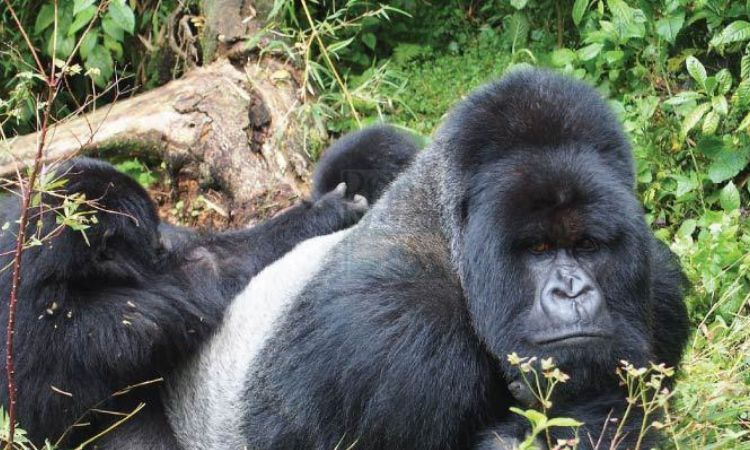
A silverback gorilla is the dominant mature male in a gorilla group — instantly recognizable by the silver-gray saddle of hair across his back that develops around age 12–15. His role? Protector, decision-maker, and guardian of the family unit, which can include up to 30 members.
How strong is a silverback gorilla? Estimates consistently show silverbacks are 4–10 times stronger than an average human male in upper-body power and overall force output.
This isn’t exaggeration — it stems from their massive muscle mass, specialized fiber composition, and evolutionary adaptations for forest survival. Focus often falls on mountain gorillas in Uganda’s Bwindi Impenetrable Forest and Virunga Mountains, plus eastern lowland gorillas. Both showcase extraordinary silverback gorilla physical abilities.
Imagine a creature that can fell small trees with ease, charge at speeds up to 25 mph in short bursts, and defend its troop from threats with sheer dominance.
Silverback gorilla strength isn’t just for show — it ensures survival in a challenging environment. In this in-depth guide, we break down their physical build, lifting power, bite force, behavioral displays, and more, backed by insights from leading conservation organizations like the Dian Fossey Gorilla Fund International and Virunga National Park.
Whether you’re planning gorilla trekking in Uganda or Rwanda or simply curious about mountain gorilla vs human strength, read on for the full picture.
Physical Build of Silverbacks: The Foundation of Their Power
Silverbacks are the largest living primates. Adult males typically weigh 300–485 lbs (136–220 kg), with mountain gorillas averaging around 430 lbs (195 kg) in the wild.
The heaviest recorded wild silverback reached 589 lbs (267 kg). When standing upright, they measure 5’5” to 6’ tall (1.65–1.83 m), though they spend most time on all fours via knuckle-walking.
Their arm span stretches an impressive 7–8.5 ft (2.3–2.7 m) — far longer than a human’s — giving incredible leverage for climbing, swinging, and striking.
What sets them apart is their muscular structure. Broad shoulders, a thick barrel-shaped chest, and enormously powerful arms dominate their physique.
The sagittal crest on the skull anchors massive jaw and neck muscles, while dense, fast-twitch muscle fibers (higher proportion than in humans) enable explosive power. Their hands feature thick, strong fingers ideal for gripping branches or vegetation — or delivering powerful blows.
Compared to female gorillas who weigh 150–250 lbs, silverbacks are dramatically bulkier, a result of sexual dimorphism driven by male competition for mates. This build supports their role as troop leaders and explains why silverback gorilla strength feels almost superhuman.
How Strong Is a Silverback Gorilla? Strength Comparisons That Will Amaze You
Gorilla lifting power stands out as one of the most discussed aspects of silverback gorilla strength. Reliable estimates from conservation sources, including Virunga National Park, indicate a silverback can lift or handle over 1,763 lbs (800 kg) of dead weight — roughly twice the maximum for a well-trained human weightlifter.
Some popular and tourism-backed figures cite up to 1,800–4,000 lbs (815–1,810 kg) in theoretical or observed feats like dragging or pushing heavy objects in the wild.
A silverback’s pulling and pushing power is equally legendary. Historical studies (including early 20th-century observations) documented gorillas exerting around 450 kg of steady pulling force.
Pound-for-pound, their upper-body strength dwarfs humans due to longer muscle fibers, higher fast-twitch content, and mechanical advantages from arm length and posture.
Mountain gorilla vs human strength:
|
Feature |
Silverback Gorilla |
Average Human Male |
|
Weight |
300–485 lbs (136–220 kg) |
154–200 lbs (70–90 kg) |
|
Lifting Strength |
4–10× human (up to 1,800+ lbs) |
Baseline (elite ~1,100 lbs deadlift) |
|
Bite Force |
~1,300 PSI |
162 PSI |
|
Arm Span |
7–8.5 ft (2.3–2.7 m) |
5–6 ft (1.5–1.8 m) |
These numbers come from field observations, biomechanical modeling, and data from organizations studying habituated groups. While exact lab measurements on wild gorillas are rare (for ethical reasons), the consensus across primatology is clear: no average human — or even a group of several — matches a silverback in raw power.
Silverback Gorilla Bite Force: Crushing Power for Survival
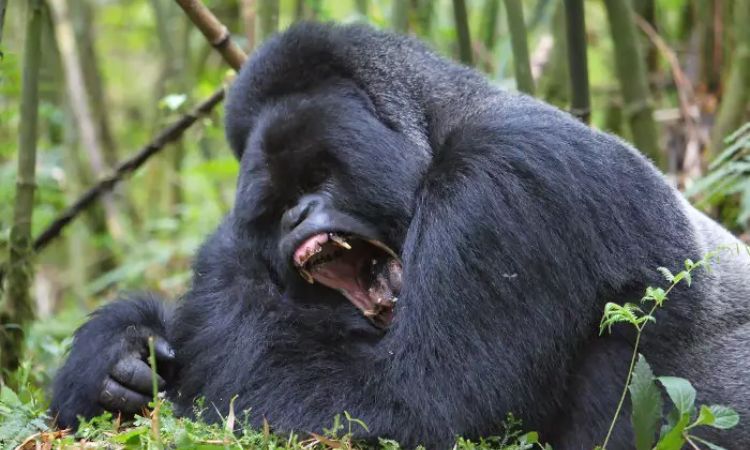
Silverback gorilla bite force reaches an estimated 1,300 PSI at the molars — enough to crush tough bamboo stems, strip bark, or defend against threats.
This dwarfs the average human bite of 162 PSI and even surpasses a lion’s 650 PSI. The force comes from enormous temporalis and masseter muscles anchored to the prominent sagittal crest.
In the wild, this bite serves daily foraging: gorillas process fibrous vegetation that would challenge most animals. During defense or dominance displays, it becomes a formidable weapon. While not primarily carnivorous, the bite force underscores their versatility as one of the strongest primates.
Why Gorillas Are So Strong: Evolutionary and Biological Reasons
Silverback gorilla strength results from millions of years of adaptation. Dense muscle fibers with a higher fast-twitch ratio (similar to but exceeding chimpanzees’ ~1.35× human dynamic power per muscle mass) deliver explosive force. Long arms provide mechanical leverage for climbing and brachiation in their arboreal-terrestrial lifestyle.
Their herbivorous diet — high in fiber from leaves, stems, fruits, and bark — supports massive muscle maintenance through constant chewing and digestion.
Males evolve greater size and power through intense competition: dominant silverbacks sire most offspring, favoring traits like broad chests and powerful arms.
Forest survival demands this strength — navigating steep terrain, building nightly nests from branches, and deterring leopards or rival males. Unlike humans, who traded raw power for endurance and tool use, gorillas retained (and amplified) brute force.
Behavior & Strength in Action: From Protection to Dominance Displays
Silverback gorillas rarely use full strength aggressively — they’re “gentle giants” most of the time. But when needed, their power shines:
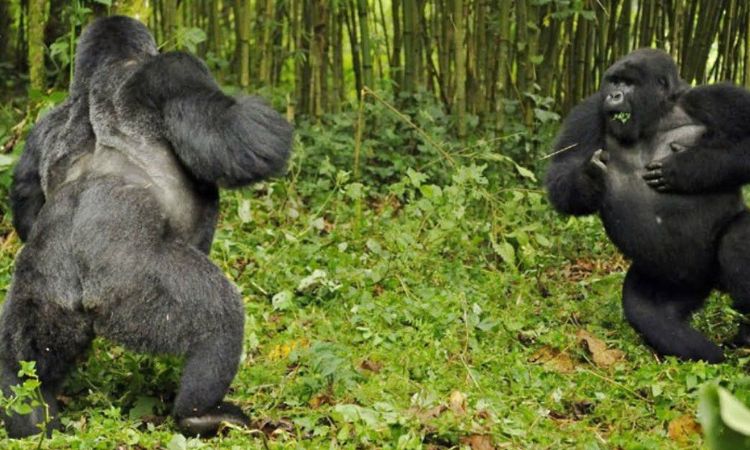
- Protecting the troop: Silverbacks charge, chest-beat, and physically intervene against predators or intruders. Famous cases, like Digit (studied by Dian Fossey), show silverbacks sacrificing themselves to save families from poachers.
- Dominance displays: They break branches, slap trees, throw vegetation, and chest-beat (audible up to 1 km away). These honest signals of size and strength often prevent actual fights.
- Daily feats: Felling small trees for fruit access, building elaborate nests, and carrying or dragging heavy foliage.
Fascinating facts include silverbacks tearing down entire saplings during displays or effortlessly climbing vines while supporting their bulk. They can swing through canopies with ease despite their size, showcasing coordinated strength.
Gorilla Diet and Muscle Development
Gorillas consume 40+ lbs of vegetation daily. This high-fiber, plant-based diet fuels their muscles without excess fat. Young shoots, leaves, and bark provide proteins and minerals that support rapid growth and sustained power in silverbacks.
Gorilla Daily Activity and Strength Use
A silverback’s day involves foraging (using strength to access high vegetation), traveling up to 1 km, playing with juveniles (gentle yet powerful wrestling), and resting. Every movement reinforces their physical abilities.
Conservation and Protection of Silverbacks
Mountain gorillas remain critically endangered, with only ~1,000 individuals left. Threats include habitat loss, poaching, and disease.
Organizations like the Dian Fossey Gorilla Fund International, Mountain Gorilla Veterinary Project, and Virunga National Park lead protection efforts through monitoring, anti-poaching, and community education.
Learn more about gorilla trekking in Uganda or Rwanda — responsible tourism directly funds conservation. Or explore mountain gorilla facts and gorilla conservation articles for ways to help.
FAQ About Silverback Gorilla Strength
How strong is a silverback gorilla compared to a human?
4–10 times stronger in upper-body power, capable of feats no human can match.
Can a silverback gorilla kill a lion?
No confirmed cases, but their size, bite force, and strength make them formidable — gorillas usually avoid large predators through group defense and displays.
How much can a silverback gorilla lift?
Estimates range from 815–1,800+ lbs (370–820+ kg), far exceeding human records.
Why are silverbacks so muscular?
Evolutionary pressure from male competition, plus adaptations for climbing and foraging in dense forests.
Are all gorillas as strong as silverbacks?
No — silverbacks are the largest and strongest. Females and younger males (blackbacks) are significantly less powerful.
How does silverback gorilla lifting power compare to other animals?
It rivals or exceeds many large mammals pound-for-pound, thanks to specialized primate musculature.
Conclusion: Respecting the Power of Silverbacks
Silverback gorilla strength — from their 1,300 PSI bite to their ability to lift nearly a ton — represents one of nature’s most impressive displays of power. Yet these animals are gentle leaders, not aggressors. Their might serves family protection and forest harmony.
By understanding and supporting conservation, we ensure future generations witness this incredible silverback gorilla strength in the wild.
Whether through gorilla trekking in Uganda’s misty mountains or simply appreciating these facts, one thing is clear: the mountain gorilla stands as a true powerhouse of the primate world.