
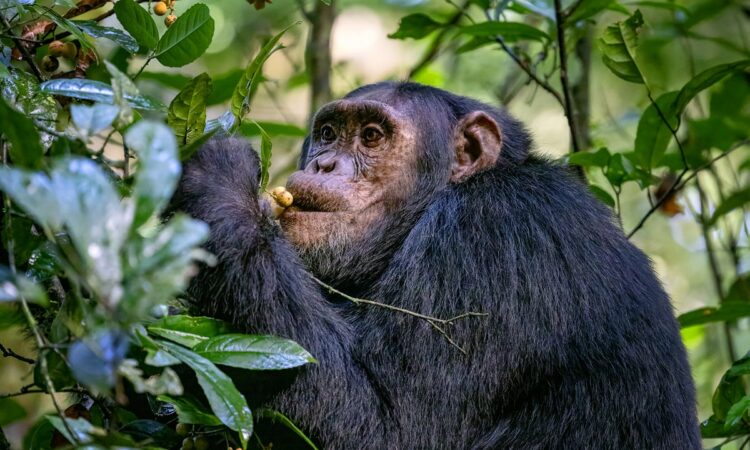
What Do Chimpanzees Eat in the Wild & Captivity
What Do Chimpanzees Eat: Chimpanzees are omnivores. They mainly eat fruits, leaves, seeds, insects, and occasionally meat. This diverse chimpanzee diet reflects their adaptability as highly intelligent primates living in dynamic tropical environments.
Understanding what do chimpanzees eat reveals much about their chimpanzee feeding habits, from daily foraging to sophisticated tool use and cooperative hunting.
Chimpanzees (Pan troglodytes) thrive across equatorial Africa, and their chimp food sources vary by location, season, and social context.
Fruit forms the bulk of their intake, but they supplement with a wide range of plant and animal matter to meet nutritional needs. This article explores every aspect of chimpanzee diet in detail.
What Do Chimpanzees Eat: Main Diet
Fruits make up the primary food source for wild chimpanzees, often accounting for 50% or more of their diet depending on availability.
Figs are especially important and can comprise nearly half of their food intake in many populations, providing quick energy from sugars and serving as a reliable staple.
Other favored fruits include mangoes, bananas in areas where wild or cultivated varieties occur, berries, papayas, watermelons, and various tropical drupes.
Leaves and stems (including pith) form a significant secondary component. Chimps consume young leaves for their protein and fiber content, especially when fruit is less abundant.
They also eat seeds and nuts, which offer fats and proteins; some groups use tools to crack hard-shelled nuts. Flowers add variety, supplying nectar or tender petals, while bark, roots, and cambium (inner tree bark) provide fallback foods during scarcity.
Insects represent a consistent but smaller portion—around 4% in many studies—delivering concentrated protein and fats. Overall, chimpanzees act as omnivorous frugivores, prioritizing ripe fruit but opportunistically incorporating other items for balance.
Plant-Based Foods Chimpanzees Eat
Beyond fruits, chimpanzees consume a broad array of vegetation:
- Fruits: Figs, a top favorite for energy, bananas, mangoes, berries, and seasonal tropical fruits.
- Leaves: Young, tender leaves and stems for fiber and protein.
- Bark and Roots: Used as fallback items or for medicinal properties.
- Seeds and Nuts: High in fats; some populations crack them with stones.
- Flowers: Eaten for nectar or petals.
Chimps sometimes ingest soil or specific plants for self-medication (zoopharmacognosy), such as bitter pith to combat parasites or leaves with antibacterial qualities. This selective feeding underscores their knowledge of the forest pharmacy.
How much does a chimpanzee eat per day?
Wild chimpanzees consume roughly 1–4 kg (2–9 lbs) of food daily, varying by age, sex, and season. Their intake focuses on fruits for energy, supplemented by leaves, insects, and occasional meat. They spend several hours foraging to meet high caloric needs from their active lifestyle.
Do Chimpanzees Eat Meat?
Yes, chimpanzees eat meat, though it typically makes up less than 2–6% of their overall diet. This discovery, pioneered by Jane Goodall’s observations at Gombe, overturned earlier assumptions that chimps were primarily herbivores. Meat provides high-quality protein, fats, and micronutrients that complement their plant-heavy intake.
Chimpanzees actively hunt small animals, with red colobus monkeys being the most common prey in many East African sites. They also target other monkeys, bushpigs, bushbucks, birds, eggs, and occasionally smaller mammals.
Hunting often occurs in coordinated groups, especially among males, involving strategic roles like drivers, blockers, and ambushers. These cooperative hunts demonstrate advanced planning and social intelligence.
Meat sharing follows hunts, reinforcing alliances and social bonds within the community. While not a daily staple, meat consumption peaks during certain seasons or when opportunities arise, highlighting the flexible nature of chimpanzee feeding habits.
How often do chimpanzees eat meat?
Chimpanzees eat meat infrequently—typically a few times per month, with hunts occurring opportunistically. Meat makes up only 1–8% of their overall diet (often under 2–6%), mostly consumed by males during group hunts. They rely far more on plant-based foods and insects.
Can chimpanzees survive without meat?
Yes, chimpanzees can easily survive without meat. They are primarily frugivorous omnivores whose diet is dominated by fruits, leaves, seeds, and insects.
Meat provides supplementary protein and nutrients but is not essential; many populations thrive with very low meat intake, and captive chimps do well on plant-based diets.
Do chimpanzees eat monkeys?
Yes, chimpanzees regularly hunt and eat monkeys, especially red colobus monkeys, which are their preferred prey. They hunt cooperatively in groups, often targeting infants or smaller monkeys. Meat from monkeys forms a small but notable part of their omnivorous chimpanzee diet, providing protein and fats.
Do chimpanzees eat humans?
Chimpanzees do not typically eat humans as prey. They are generally wary of adult humans and prefer to avoid confrontation.
Rare attacks on humans (usually children or infants) have occurred, sometimes involving killing, but cannibalistic consumption of humans is extremely uncommon and not part of normal chimpanzee feeding habits.
Do chimpanzees eat baboons?
Yes, chimpanzees occasionally hunt and eat baboons, particularly infants or smaller individuals. While they prefer red colobus monkeys, baboons appear in their diet at some sites through opportunistic predation or competition for meat. This reflects the flexible, omnivorous nature of chimp food sources.
Do chimpanzees eat fish?
Chimpanzees rarely eat fish. Their diet occasionally includes aquatic items like crabs (via “fishing” with tools in some populations), but fish are not a regular or significant food source. They lack reliable methods to catch fish consistently and focus instead on forest fruits, insects, and terrestrial prey.
Why Chimpanzees Eat What They Eat
Chimpanzees’ diet is shaped by nutritional needs, high energy requirements, and seasonal food availability. As large-bodied primates with active social lives, they require substantial calories—primarily from carbohydrate-rich fruits—while balancing protein intake.
Studies show they often prioritize protein while maximizing non-protein energy within that constraint, maintaining a relatively stable protein ratio even as fruit intake fluctuates.
Their omnivorous nature allows flexibility: fruit provides quick energy for travel and social activities, leaves and pith offer sustained fiber for digestion, insects and meat supply essential amino acids and fats.
Seasonal scarcity drives shifts toward lower-quality foods like leaves or bark, demonstrating remarkable adaptability tied to their intelligence.
Where Chimpanzees Find Food
Chimpanzees inhabit tropical forests, woodlands, and savanna-forest mosaics across Africa. They forage primarily in tree canopies, where most fruits, leaves, flowers, and nuts are located. Groups travel daily, covering distances to reach productive feeding trees.
On the ground, they search for insects such as ants, and termites, roots, or opportunities to hunt terrestrial prey. Termite mounds and ant nests are key sites for tool-assisted foraging. This vertical and horizontal use of the habitat maximizes resource access while minimizing energy expenditure.
Feeding Behavior
Chimpanzees spend many hours each day foraging and feeding—often 4–7 hours or more. They move between food patches, resting in between to digest. Social feeding is common; large fruiting trees become gathering points where communities socialize while eating.
A hallmark of their intelligence is tool use. Famous examples include “termite fishing,” where chimps strip sticks or twigs and insert them into mounds to extract insects.
Techniques vary culturally between populations—some use single tools, others employ tool sets, perforators plus probes.
They also use stones to crack nuts or leaves as sponges for water. These behaviors highlight learned, transmitted skills that enhance feeding efficiency.

What Baby Chimpanzees Eat
Infant chimpanzees begin with mother’s milk, which provides complete nutrition for the early months. Solid foods may appear in feces as early as a few months old, but significant intake ramps up around 1–3 years as molars erupt. Weaning is gradual, typically completing between 4–5 years, though comfort nursing can continue.
Young chimps learn feeding skills by observing and mimicking adults—trying fruits, leaves, and even attempting tool use. Mothers share food and demonstrate techniques, ensuring cultural transmission of diet knowledge.
By age 3–4, immatures spend more time feeding independently, shifting from milk to solid foods like leaves and softer fruits.
Seasonal Diet Changes
Availability drives major shifts. In fruit-abundant seasons, often wet periods, chimps focus heavily on ripe fruits and figs, reducing time on lower-quality items.
When fruit is scarce especially during dry seasons or bottlenecks, they increase consumption of leaves, pith, stems, bark, insects, and meat. This flexibility prevents nutritional shortfalls and supports survival in variable environments.
Diet Differences in Captivity vs. Wild
In the wild, chimpanzees eat natural foods: diverse fruits, leaves, insects, and occasional meat obtained through foraging and hunting. Diets are high in fiber and variable by season.
In captivity, zoos, and sanctuaries, caretakers mimic this with fruits including apples, oranges, bananas, melons, vegetables, leafy greens, and primate chow or biscuits for balanced nutrition.
Browse branches, leaves encourages natural feeding. Meat is rarely or never provided; instead, protein comes from chow, eggs, or insects in enrichment.
Foraging devices and scattered foods promote activity. Captive diets are more consistent but lower in some natural fibers, so supplements and enrichment are essential.
Chimpanzee Diet – Quick Summary
|
Category |
Chimpanzee Diet |
|
Type |
Omnivore (primarily frugivorous) |
|
Main food |
Fruits (especially figs) |
|
Other food |
Leaves, stems, seeds, nuts, flowers, insects, occasional meat |
|
Feeding style |
Foraging + opportunistic hunting + tool use |
FAQs – What Do Chimpanzees Eat
Do chimpanzees eat meat?
Yes, they hunt and consume small mammals especially monkeys, birds, eggs, and insects, though meat is a minor dietary component.
What is a chimpanzee’s favorite food?
Figs rank highly for energy and availability; bananas, mangoes, and melons are also popular where available. Individual preferences vary.
How often do chimpanzees eat?
They feed throughout the day, spending several hours foraging and eating, with peaks in morning and afternoon.
Are chimpanzees herbivores or omnivores?
They are omnivores, consuming both plant and animal matter, though plants (especially fruit) dominate their chimpanzee diet.
Conclusion
Chimpanzees eat a varied, adaptive diet centered on fruits but enriched by leaves, insects, and occasional meat. Their chimpanzee feeding habits—including tool use, cooperative hunting, and seasonal flexibility—showcase remarkable intelligence and problem-solving. This omnivorous lifestyle supports their complex social lives and high energy demands in Africa‘s forests.
By learning what do chimpanzees eat, we gain deeper appreciation for their adaptability and the importance of protecting their habitats.
Whether planning a chimpanzee trekking Uganda experience or a primate safaris adventure, understanding these behaviors enriches every wildlife encounter.