

How Long Is a Gorilla Pregnant: Gorilla Pregnancy Pictures & more
Gorillas, one of our closest primate relatives, have a fascinating reproductive cycle that mirrors some aspects of human pregnancy while differing in key ways.
A gorilla pregnancy lasts about 8.5 months, or approximately 255 to 260 days, which is slightly shorter than a human gestation period.
During this time, the female gorilla nurtures a single offspring, preparing for birth in a process shaped by their social structure and environment.
Understanding the gorilla gestation period not only answers common questions about gorilla reproduction but also highlights the importance of conservation efforts for these endangered animals.
This gestation length allows the baby gorilla to develop sufficiently for survival in the wild, where threats like predators and habitat loss are constant.
Gorilla Gestation Period Explained
The gorilla gestation period is a critical phase in the life cycle of these majestic apes. On average, it spans 8.5 months, though it can range from 251 to 295 days depending on the subspecies, such as mountain gorillas or western lowland gorillas.
This duration is remarkably similar to human pregnancy, which averages 9 months or 266 days, but gorilla infants are born slightly smaller and more developed in terms of mobility readiness.
Why does this gestation length matter? In evolutionary terms, it strikes a balance between allowing the fetus to mature and minimizing the time the mother is vulnerable during pregnancy.

Female gorillas experience subtle physical changes; their stomachs are naturally large due to their herbivorous diet, making pregnancy hard to detect visually until late stages.
Primatologists estimate that this period ensures the infant is born with enough strength to cling to its mother shortly after birth, essential for survival in dense forests.
Scientifically accurate data from field studies, such as those by the Dian Fossey Gorilla Fund, confirm these timelines through observations of wild populations.
For general readers, think of it this way: just as human pregnancies involve trimesters with developmental milestones, gorilla pregnancies follow a similar progression, though adapted to their arboreal and ground-dwelling lifestyle.
Gorilla Pregnancy vs Other Primates
To put the gorilla pregnancy period in perspective, it’s helpful to compare it with other great apes. Gorillas share many traits with chimpanzees, orangutans, and humans, but gestation lengths vary slightly, reflecting differences in body size, brain development, and environmental pressures.
Here’s a comparison table based on reliable wildlife data:
|
Species |
Gestation Period |
|
Gorilla |
~8.5 months (255-260 days) |
|
Chimpanzee |
~7.5 months (237 days) |
|
Orangutan |
~8.5 months (260 days) |
|
Human |
~9 months (266 days) |
|
Dog |
~2 months (63 days) |
These variations highlight evolutionary adaptations. For instance, chimpanzees have shorter pregnancies, possibly due to their more arboreal lifestyle requiring quicker mobility post-birth.
Gorillas and orangutans, being larger, invest similar time in gestation to support robust skeletal development. Humans, with larger brains, extend this period slightly further, while dogs have a much shorter gestation of about 63 days on average.
How Often Do Gorillas Get Pregnant?
Gorilla birth intervals are notably long, contributing to their slow population growth. Female gorillas typically give birth every 4 to 6 years, a spacing influenced by the demands of raising dependent offspring.
After birth, mothers invest heavily in nursing and protection, which suppresses ovulation through a natural form of contraception known as lactational amenorrhea.
Why are births so spaced out? Infant survival is paramount; baby gorillas remain with their mothers for up to 4 years, learning essential skills like foraging and social interaction.
This extended dependency ensures higher survival rates but limits reproductive frequency. In mountain gorillas, females first give birth around age 10, and over a lifetime, they may have only 3 to 6 offspring—answering the common question of how many babies do gorillas have in a lifetime.
Factors like nutrition and group dynamics can influence this; in stable troops led by a dominant silverback, birth rates may be higher due to better protection.
This low reproductive rate underscores the vulnerability of gorillas to threats like poaching and habitat loss, making every successful pregnancy vital for species survival.
What Happens During Gorilla Pregnancy?
Gorilla pregnancy unfolds in stages, with behavioral and physiological changes that prepare both mother and troop for the new arrival.
Early Pregnancy
In the first few months, signs are minimal. The estrous cycle, lasting 30-33 days, ceases as the fetus implants. Females may exhibit subtle swelling or increased appetite, but outward changes are rare. According to wildlife researchers, this phase focuses on fetal organ development, similar to human first-trimester milestones.
Late Pregnancy
As the pregnancy advances, the mother may rest more and interact less aggressively with the group. Swollen knuckles or a slightly protruding belly can indicate impending birth. Nesting behavior intensifies; females build more elaborate sleeping nests from vegetation, providing a safe birthing spot.
Behavior Changes
Pregnant gorillas often receive deference from troop members, with the silverback offering protection. These adaptations keep readers engaged by painting a vivid picture of gorilla social life.

Birth and Newborn Gorilla Care
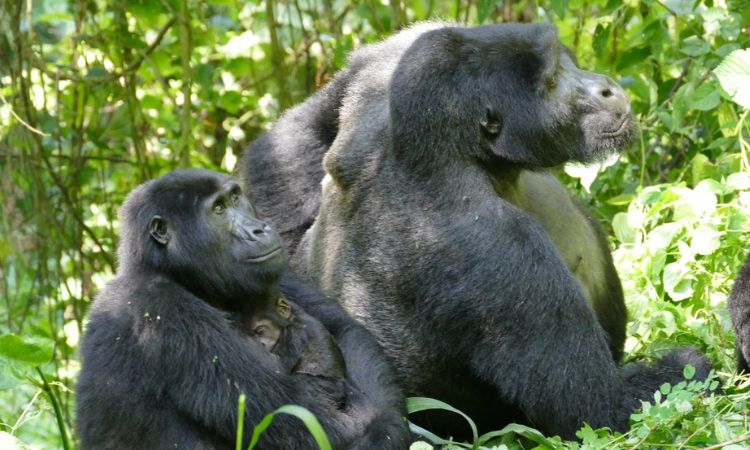
Gorilla births are typically solitary events, occurring at night in the nest. Most result in a single infant, though gorilla giving birth to twins is rare and often faces survival challenges due to the added demands on the mother.
Newborn gorilla weight is about 4 pounds (1.8-2 kg), smaller than human babies, and they are born with open eyes and a strong grip.
Maternal care is intensive; the mother cleans the infant and encourages immediate clinging to her belly. For the first few months, the baby nurses exclusively, growing rapidly—reaching milestones like smiling and playing by 8 weeks.
A 1 year old gorilla weight can reach around 40-50 pounds as they develop quickly in the early years. By age 2, a 2 year old gorilla is significantly larger and more mobile, often weighing 60-80 pounds depending on subspecies and nutrition. Even a 5 year old gorilla weight approaches 150-200 pounds for males, showing their rapid growth trajectory.
The silverback gorilla plays a protective role—often referred to playfully in queries like “gorilla pregnancy baby daddy”—defending the troop and sometimes interacting gently with the young, enhancing group bonds.
While the dominant silverback gorilla typically sires most offspring, paternity can involve multiple males in larger groups, but he provides protection regardless.
This phase emphasizes the family-oriented nature of gorilla reproduction, where communal care boosts infant survival.
Gorilla Pregnancy in the Wild vs Captivity
Pregnancies in the wild face stressors like food scarcity and disease, potentially affecting gestation and outcomes. Survival rates for infants can be as low as 60-70% due to predation and infanticide.
In captivity, such as in zoos, nutrition is optimized, and veterinary care—including ultrasounds—improves outcomes. However, stress from confinement can mimic wild challenges. Conservation programs use captive breeding to bolster populations, with implications for reintroduction efforts.

Conservation & Why Gorilla Pregnancy Matters
Gorillas’ low reproductive rate—coupled with threats like habitat destruction and poaching—makes them critically endangered. Protecting pregnant females is crucial, as each birth contributes to population stability. Organizations like the World Wildlife Fund emphasize habitat preservation and anti-poaching measures.
Responsible tourism, such as gorilla trekking with strict rules, supports conservation by funding patrols and community programs.
FAQ about Gorilla Reproduction
How long is a gorilla pregnant?
A gorilla is pregnant for about 8.5 months, or 255-260 days.
Do gorillas have twins?
Twins are rare in gorillas (gorilla giving birth to twins occurs infrequently) and often have lower survival rates.
How many babies does a gorilla have?
Over a lifetime, a female gorilla has 3 to 6 babies (how many babies do gorillas have in a lifetime) due to long birth intervals.
How long does a baby gorilla stay with its mother?
Baby gorillas stay with their mothers for 3 to 4 years, learning survival skills.
Do silverbacks help raise babies?
Silverbacks protect the troop and may interact with infants (including the “gorilla pregnancy baby daddy” role in protection), but primary care is maternal.
What is newborn gorilla weight?
Newborn gorillas typically weigh about 4 pounds (1.8-2 kg).
How big is a 1 year old gorilla / 2 year old gorilla / 5 year old gorilla?
A 1 year old gorilla weighs around 40-50 pounds; a 2 year old gorilla is larger at 60-80 pounds; a 5 year old gorilla can weigh 150-200 pounds, especially males.
How long is a dog pregnant?
Dogs are pregnant for about 63 days (around 2 months).
What is the role of reproduction in gorilla conservation?
Slow reproduction makes gorillas vulnerable; conservation focuses on protecting breeding females to ensure population growth.
Conclusion
In summary, a gorilla pregnancy lasts around 8.5 months, a period vital for developing resilient offspring in a challenging world. This gestation, combined with spaced births, rare twins, dedicated care, and the silverback’s protective role, underscores the delicate balance of gorilla reproduction.
As threats mount, understanding these processes—including growth milestones like newborn gorilla weight and sizes at various ages—fuels conservation efforts—protecting habitats and promoting responsible tourism can make a difference.