
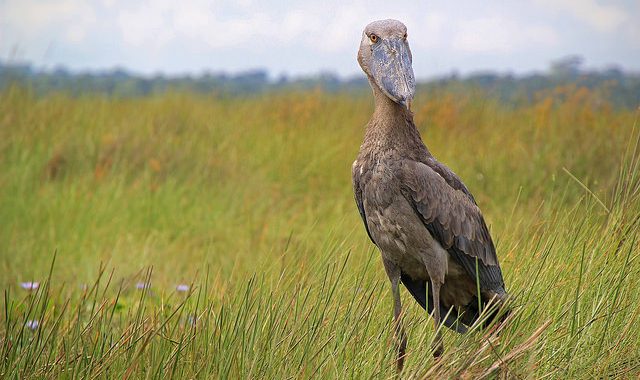
Shoebill Stork Size in Feet, Compared to Humans, & more
Shoebill stork size: The Shoebill Stork stands about 110–140 cm (3.6–4.6 feet) tall, has a wingspan of 2.3–2.6 meters (7.5–8.5 feet), and weighs 4–7 kg (8.8–15.4 lbs).
Some individuals reach up to 152 cm in height. Its enormous shoe-shaped beak measures up to 24 cm long and about 20 cm wide, making it one of the largest bills among living birds.
This prehistoric-looking wading bird, also known as the whale-headed stork, combines impressive stature with specialized adaptations for life in dense African wetlands.
Detailed Shoebill Stork Size Breakdown
The shoebill stork size makes it one of the most striking large birds in Africa. Here’s a precise breakdown:
Height
- 110–140 cm (43–55 inches), with exceptional specimens reaching 152 cm (60 inches).
- Standing on its long legs, a shoebill often appears as tall as a young teenager or small adult human (comparable to many 5th graders in height).
- This height allows it to wade through deep water and tall papyrus reeds while keeping its body elevated.
Wingspan
- 2.3–2.6 meters (7.5–8.5 feet).
- Broad, powerful wings support soaring flight despite the bird’s heavy build.
- The wing chord (length from body to wingtip) measures 58.8–78 cm, contributing to efficient gliding over swamps.
Weight
- 4–7 kg (8.8–15.4 lbs) on average.
- Males typically weigh around 5.6 kg (12 lbs), while females average 4.9 kg (11 lbs).
- Despite this weight, shoebills remain capable of strong, if somewhat slow, flight, reaching speeds of 35–48 km/h with powerful wingbeats.

Shoebill Stork Size vs Human and Other Birds
When asking how big is a shoebill, comparisons help put its dimensions into perspective:
- Taller than many storks and wading birds: It exceeds the height of most herons and smaller storks, though it is shorter than the tallest cranes or the ostrich (which can reach over 2.5 meters but is flightless).
- Wingspan similar to large eagles or pelicans: Comparable to a white-tailed eagle or wandering albatross in spread, though the shoebill’s wings are broader and adapted for soaring rather than high-speed pursuit.
- Heavier than most wading birds: Lighter than large raptors like condors but bulkier than typical storks, giving it a solid, imposing presence in the marshes.
- Shoebill stork size compared to human: At 110–152 cm tall when standing upright, it reaches about waist-to-chest height on an average adult human. Its overall length from tail to beak (100–140 cm) and massive head give it a human-like stature that feels prehistoric up close.
The shoebill is not the absolute biggest bird in Africa (that title goes to the ostrich), but it ranks among the largest flying waders and is often considered one of the most impressive due to its unique proportions.
Male vs Female Shoebill Size Difference
Males are slightly larger than females, a common trait in many bird species (sexual dimorphism).
- Males: Average weight ~5.6 kg, often taller with longer bills.
- Females: Average weight ~4.9 kg, generally a bit smaller overall.
The difference is minimal and not dramatic—both sexes share the same impressive range in height and wingspan. Males’ longer bills may give them a slight advantage in handling larger prey during breeding season.
Size vs Habitat Adaptation: Why Being Big Matters for Shoebills
The shoebill stork size is perfectly adapted to its challenging environment in tropical swamps and papyrus marshes.
Its long legs and large feet (middle toe up to 16.8–18.5 cm) allow it to stand stably on floating vegetation without sinking, much like snowshoes for wetlands. The tall stature helps it peer over dense reeds while hunting.
Broad wings enable it to take off from confined spaces and soar thermals above the swamps, even though it is one of the heavier flying birds. Yes, shoebill birds can fly—they do so powerfully, though with slower wingbeats (around 150 per minute) than smaller species.
The massive body and bill support an ambush-predator lifestyle: the bird stands motionless for long periods before striking. Large size also helps deter potential threats and allows it to tackle substantial prey, including lungfish, tilapia, snakes, young crocodiles, and even small mammals.
Shoebill Beak Size: A Standout Feature
No discussion of shoebill size is complete without its iconic beak, which drives many searches for shoebill beak size.
- Length: Up to 24 cm (9.4 inches) along the culmen (top of the upper mandible).
- Width: About 20 cm (8 inches) at its broadest, with a deep, shoe-like shape.
- The bill is thick, hooked at the tip, and features sharp cutting edges—perfect for grabbing slippery fish, decapitating prey, or discarding vegetation. It ranks as the third-longest bill among extant birds (after some pelicans and large storks) and can rival pelicans in volume and circumference.
This Dutch clog or whale-head appearance is not just for show; it functions as a powerful tool in murky swamp waters.

Shoebill Stork Size Comparison Table
|
Feature |
Measurement |
Notes |
|
Height |
110–140 cm (up to 152 cm) |
3.6–4.6 ft; some reach 5 ft |
|
Wingspan |
2.3–2.6 m |
7.5–8.5 ft; broad for soaring |
|
Weight |
4–7 kg |
Males ~5.6 kg, females ~4.9 kg |
|
Beak Length |
Up to 24 cm |
3rd longest among living birds |
|
Beak Width |
~20 cm |
Deep, shoe-shaped with sharp edges |
Where to See Shoebills in the Wild
For the best chance to witness this majestic bird’s true shoebill stork size up close, head to the wetlands of East Africa.
Mabamba Swamp in Uganda, on the shores of Lake Victoria near Entebbe, is one of the most reliable and accessible spots. Boat tours through the papyrus channels often yield excellent views of shoebills standing tall or in flight.
Uganda hosts a significant portion of the global population (estimated 5,000–8,000 birds worldwide), making it a prime destination for birdwatchers and safari enthusiasts.
Other key areas include wetlands in South Sudan and scattered marshes across Central and East Africa. Combine your shoebill search with birdwatching in Uganda or Mabamba swamp tours for a memorable experience observing rare birds in Africa.
Shoebill Stork Size FAQs
How tall is a shoebill stork?
Typically 110–140 cm (3.6–4.6 feet), with some reaching 152 cm. It stands taller than many wading birds.
What is the wingspan of a shoebill?
2.3–2.6 meters (7.5–8.5 feet), allowing powerful flight over swamps.
How heavy is a shoebill stork?
4–7 kg, with males slightly heavier on average.
Is the shoebill the biggest bird in Africa?
No—the ostrich is taller and heavier—but the shoebill is one of the largest flying wading birds and has one of the most imposing presences due to its bill and stature.
How big was the biggest shoebill?
Records show heights up to 152 cm and weights within the 4–7 kg range; no dramatically larger outliers are widely documented beyond these figures.
Can a shoebill bird fly?
Yes, despite its size and weight, it flies effectively with broad wings, often soaring gracefully.
Shoebill height and weight in feet?
Height: 3.6–4.6+ feet; weight equivalent to a medium-sized dog or large house cat (8.8–15.4 lbs).
The shoebill stork size—from its towering height and wide wingspan to its signature massive beak—makes it a true icon of African wetlands.
Whether you’re planning a safari or simply fascinated by remarkable wildlife, this bird’s dimensions reveal a perfectly engineered survivor of the swamps. For an unforgettable encounter, consider Mabamba swamp tours in Uganda, where these prehistoric giants still roam in their natural habitat.