Top 7 Facts about Female Gorillas: Behavior, Roles, & more
Female Gorillas: Discover the vital role of female gorillas in gorilla societies, from nurturing infants to maintaining group stability.
Learn about their behavior, reproduction, relationships with silverbacks, and the importance of conservation in protecting these remarkable primates.
Female gorillas play a pivotal role in the intricate social structures of gorilla societies, contributing to group stability, reproduction, and the survival of their species. As key caregivers and social connectors, female gorillas are essential to the cohesion of their families.
Physical Characteristics of Female Gorillas
Female gorillas are notably smaller than their male counterparts, the silverbacks. On average, an adult female gorilla weighs between 150–200 pounds (68–90 kg), while silverbacks can weigh up to 400 pounds (180 kg).
Standing at about 4.5–5 feet (1.4–1.5 meters) tall when upright, females are agile and well-adapted to their forest environments.
Unlike silverbacks, who develop a distinctive silver patch of fur on their backs as they mature, females retain darker fur, typically black or dark brown. Their robust build supports their active roles as mothers and foragers in dense jungle habitats.
Role of Female Gorillas in a Group
In gorilla troops, which typically consist of 5–30 individuals, female gorillas serve as the backbone of social harmony. Their primary roles include:
- Caregivers: Females are the primary caretakers of infants, ensuring their safety and development.
- Social Bonding: They form strong relationships with other females and the dominant silverback, fostering group unity.
- Group Stability: By maintaining alliances and resolving minor conflicts, females help keep the troop cohesive.
Females often migrate between groups when they reach sexual maturity, a behavior that promotes genetic diversity and prevents inbreeding. Their presence is crucial for the survival of the troop, as they contribute to both nurturing and social dynamics.

Female Gorilla Mating and Reproduction
Female gorillas reach sexual maturity around 7–8 years of age, though they typically don’t reproduce until around age 10. Mating is primarily controlled by the dominant silverback, who has exclusive breeding rights within the group. However, females may choose to leave their natal group to join another, often seeking a strong silverback who can provide protection.
The gestation period for a female gorilla lasts approximately 8.5 months, after which a single infant is born, weighing about 4–5 pounds (1.8–2.3 kg).
Twins are rare but not unheard of. Female gorillas have a reproductive cycle of about 28–32 days and can give birth every 3–4 years, assuming the infant survives. This slow reproductive rate makes their role in species survival critical.
Motherhood and Infant Care
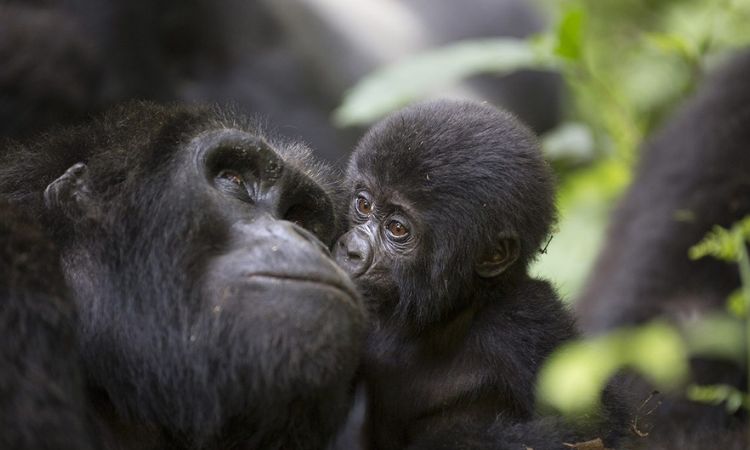
Motherhood is a defining aspect of a female gorilla’s life. After giving birth, females nurse their infants for up to 3–4 years, providing essential nutrients and protection.
Infants remain physically close to their mothers, often riding on their backs or clinging to their chests during the first few months.
Female gorillas teach their young vital survival skills, such as foraging for food, navigating the forest, and interacting with other group members.
This extended period of care ensures that infants grow strong and learn the behaviors necessary to thrive in their environment. The bond between mother and infant is profound, with females showing remarkable patience and attentiveness.
Relationships with Silverbacks and Other Females
The relationship between female gorillas and the dominant silverback is complex. The silverback provides protection from predators and rival males, while females rely on him for leadership and mating opportunities. In return, females contribute to the group’s stability by supporting the silverback’s authority.
Among females, relationships can be both cooperative and competitive. Females within a group often form alliances to strengthen their social standing, but competition for the silverback’s attention or resources can lead to tension.
These dynamics are mediated through grooming, vocalizations, and physical interactions, which help maintain harmony.

Female Gorillas vs. Males
Female gorillas are smaller, weighing 150–200 pounds compared to males (silverbacks) at up to 400 pounds. Females lack the silverback’s distinctive silver fur and are less dominant, focusing on caregiving and social bonding.
Males lead and protect the group, using their size and strength to deter threats. Females maintain group stability, while silverbacks enforce hierarchy. Both cooperate, but females often migrate between groups, unlike males who stay or form new troops.
Are Female Gorillas Aggressive?
Female gorillas are generally not aggressive, prioritizing caregiving and social harmony. They may show aggression during competition for resources or the silverback’s attention, using vocalizations or physical displays like chest-beating.
Compared to males, their aggression is milder and less frequent, often aimed at maintaining social order or protecting infants.
Conflicts are usually resolved through grooming or submission. In threatening situations, females rely on the silverback for defense rather than engaging directly.
Life Cycle of Female Gorillas
The life cycle of a female gorilla is marked by distinct stages:
- Infant (0–3 years): Fully dependent on the mother for nourishment and protection.
- Juvenile (3–6 years): Begins exploring independently but remains close to the mother.
- Subadult (6–8 years): Starts developing social and survival skills; females may leave their natal group.
- Adult (8–35+ years): Reaches sexual maturity, reproduces, and takes on caregiving roles.
- Elder (35+ years): Older females may continue to contribute to the group’s social structure, though reproduction typically slows.
Female gorillas can live up to 40–50 years in the wild, with lifespans slightly longer in captivity due to consistent food and medical care. Their longevity depends on factors like habitat quality, food availability, and protection from threats.
Conservation and Protection of Female Gorillas
Protecting female gorillas is vital for the survival of gorilla populations, as their reproductive role directly impacts species growth.
Both mountain gorillas (Gorilla beringei beringei) and western lowland gorillas (Gorilla gorilla gorilla) face significant threats, including habitat loss, poaching, and disease.
For example, the mountain gorilla population, once critically endangered, has grown to over 1,000 individuals due to conservation efforts, but challenges remain.
Ecotourism and sanctuaries play a critical role in gorilla conservation. Responsible tourism provides funding for habitat preservation and anti-poaching patrols, while sanctuaries offer refuge for orphaned or injured gorillas.
Protecting females, in particular, ensures that future generations can thrive, as thhttps://www.worldwildlife.org/eir caregiving directly influences infant survival rates.
According to the World Wildlife Fund (WWF), conservation programs have increased the survival rate of gorilla infants by 20% in protected areas over the past few decades.
Comparing Female Gorillas to Other Primates
Compared to other primates, female gorillas exhibit unique traits. Unlike female chimpanzees, who are more independent and less reliant on a dominant male, female gorillas depend heavily on the silverback for protection.
However, like human mothers, female gorillas show extended parental care, nursing and nurturing their young for years. Their social structure also resembles that of bonobos, where females form alliances to maintain group cohesion, though gorilla societies are more hierarchical.
Statistically, female gorillas have a lower reproductive rate than many other primates. For instance, female chimpanzees can give birth every 5–6 years, while female gorillas typically reproduce every 3–4 years. However, gorilla infants have a higher survival rate due to the protective group structure and maternal care.
FAQs About Female Gorillas
Do female gorillas ever become leaders?
No, female gorillas do not typically become leaders. Leadership is reserved for the dominant silverback, who protects and guides the group. However, older females may hold influential roles in maintaining social bonds.
How many babies can a female gorilla have?
A female gorilla can have 3–6 offspring in her lifetime, depending on her age, health, and environmental conditions. The slow reproductive rate makes each infant critical to the population.
How long do female gorillas live?
Female gorillas can live 40–50 years in the wild, with slightly longer lifespans in captivity due to better access to food and medical care.