
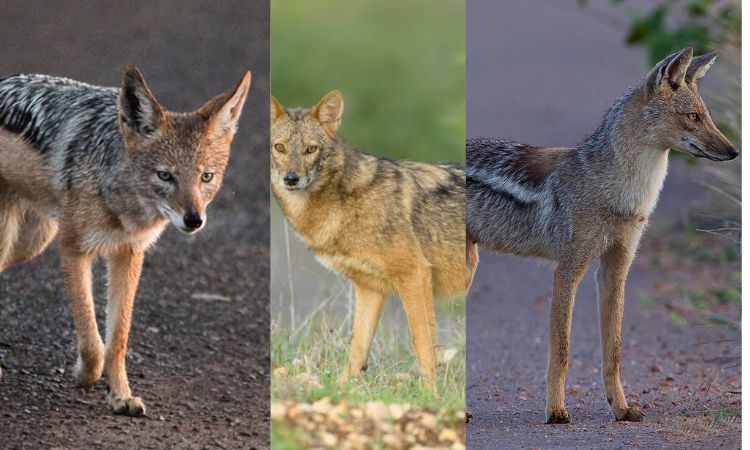
Jackals: 3 Species, Photos & Interesting Facts
Jackals are fascinating medium-sized wild canids that captivate wildlife enthusiasts and safari-goers alike. Belonging to the Canidae family, these intelligent and adaptable creatures are found across Africa, Asia, and parts of Europe.
Known for their cunning nature and opportunistic lifestyle, jackals thrive in diverse environments, from arid deserts to lush savannas. In African safaris, spotting jackals adds an extra layer of excitement, as they often appear near larger predators, scavenging meals with remarkable efficiency.
Their adaptability makes them survivors in changing landscapes, symbolizing resilience in folklore and modern stories.
What Are Jackals?
What are jackals? At their core, jackals are medium-sized carnivores in the Canidae family, closely related to dogs, wolves, and foxes.
Scientifically classified under the genus Canis, they share traits with domestic dogs—are jackals dogs? In a way, yes; they’re part of the same family, but wild and untamed.
Jackals animals typically weigh between 5-15 kg (11-33 lbs), with a body length of 70-85 cm (28-33 inches), plus a bushy tail. Their fur varies by species, often in shades of gray, brown, or golden, with large ears for heat dissipation and keen senses for survival.
These animals boast a lifespan of 8-12 years in the wild, extending to 16 in captivity. What are jackals known for? Their incredible adaptability—jackals can switch from solitary hunting to scavenging, making them resilient in harsh conditions. This intelligence has earned them a reputation as clever opportunists, often outsmarting larger predators.
Types of Jackals
There are three primary types of jackals, each with unique adaptations. Understanding jackal species is key for safari enthusiasts, as sightings vary by region.
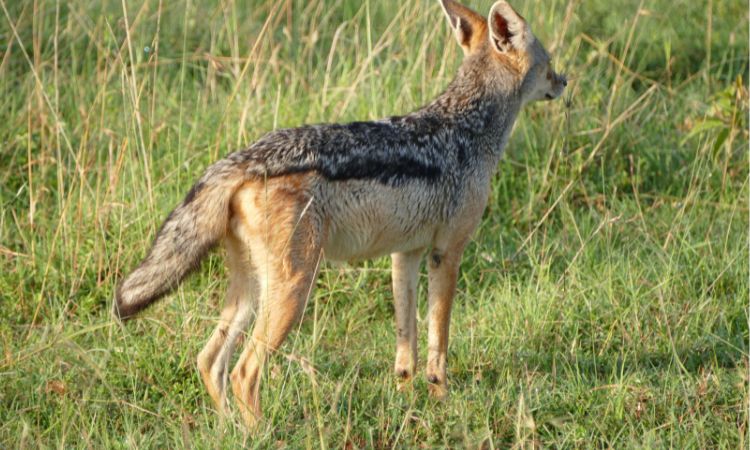
Black-Backed Jackal
The black-backed jackal (Canis mesomelas) is iconic in East and Southern Africa. Recognizable by its striking black saddle on a reddish-brown coat, this species measures about 40 cm at the shoulder.
Found in savannas and woodlands, they’re bold scavengers, often seen near lion kills during safaris in places like Kruger National Park.
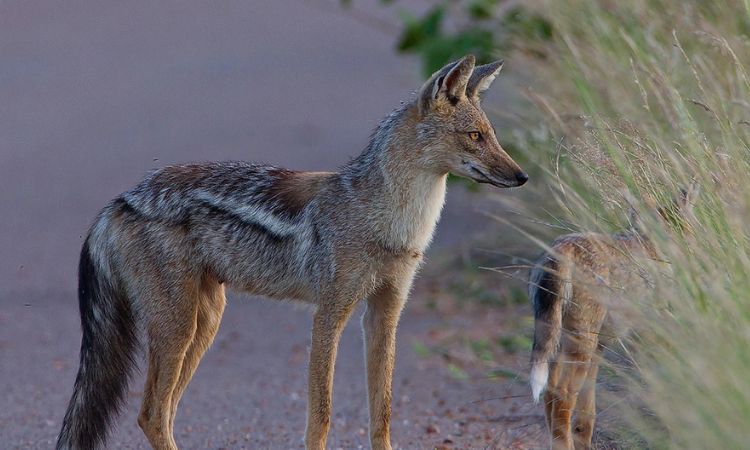
Side-Striped Jackal
The side-striped jackal (Canis adustus) inhabits Central and Southern Africa, preferring denser forests and savannas. With a grayish coat and faint white stripes along the sides, they’re shyer than their black-backed cousins. This species adapts well to wetter habitats, making them a treat to spot in Zambia’s Kafue National Park.

Golden Jackal
The golden jackal (Canis aureus) spans North Africa, the Middle East, Asia, and Europe. Larger and more wolf-like, with a golden-yellow coat, they’re versatile, living in deserts to mountains. In Africa, they’re common in the north, but safari sightings are rarer in the south.
Where Do Jackals Live?
Where are jackals found? Jackal habitat includes savannas, grasslands, semi-deserts, and forest edges across Africa and Eurasia. In Africa, black-backed and side-striped species dominate the south and east, while golden jackals prefer northern regions. They avoid dense rainforests but thrive in human-modified landscapes, showcasing their adaptability.
Jackal Diet and Feeding Behavior
What do jackals eat? As omnivores, jackals have a varied diet, including small mammals, birds, insects, fruits, and carrion. They’re expert scavengers, often following hyenas or lions to steal scraps, but they also hunt in pairs, taking down hares or antelopes.
This opportunistic feeding—scavenging vs. active hunting—makes them efficient survivors. In safaris, watch jackals cooperating with vultures or even larger predators for meals.
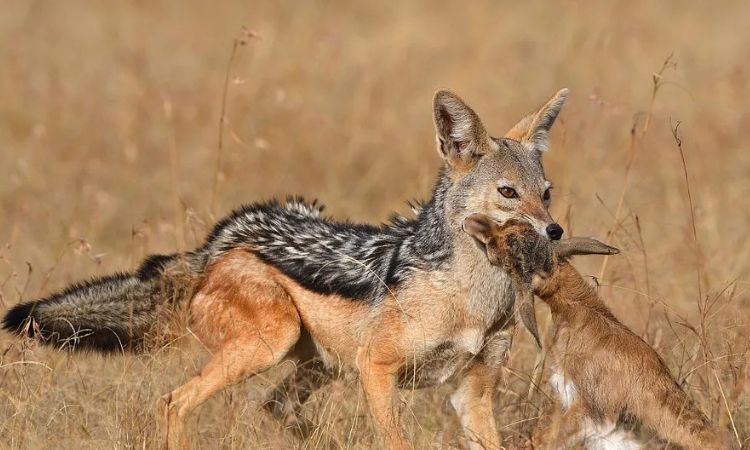
Jackal Behavior and Social Structure
Jackals form monogamous pairs that mate for life, raising pups in family units of 2-6 members. They’re territorial, using vocalizations like howls and yips to communicate.
The jackal sound is a distinctive wailing howl, often heard at dusk in African bushlands— a chorus that echoes through safaris, signaling family bonds or warnings. Yelps and barks alert to danger, while cackles express excitement.
Known for intelligence, jackals use deception, like fake alarm calls to steal food from others.
Are Jackals Dangerous to Humans?
Are jackals dangerous? Generally, no—jackals avoid humans, being shy and non-aggressive. However, in rural areas, they may raid livestock, leading to conflicts. Myths portray them as threats, but facts show rare attacks, usually rabid individuals.
For safari-goers, they’re safe to observe from vehicles, adding thrill without risk. Always respect wildlife guidelines to minimize encounters.
Jackals vs Wolves vs Foxes
How do jackals compare to wolves and foxes? Here’s a handy comparison table to highlight differences:
|
Aspect |
Jackals |
Wolves |
Foxes |
|
Size |
Medium (5-15 kg) |
Large (20-80 kg) |
Small (3-7 kg) |
|
Behavior |
Opportunistic scavengers, monogamous pairs |
Pack hunters, hierarchical |
Solitary, cunning hunters |
|
Habitat |
Savannas, deserts |
Forests, tundras |
Varied, urban adaptable |
|
Social Structure |
Family units |
Large packs |
Mostly solitary |
Jackals vs fox: Both are adaptable, but jackals are larger and more social.

Jackals on African Safaris
For safari relevance, jackals are common in Africa’s top parks. In East Africa, spot black-backed jackals in Serengeti or Masai Mara, scavenging near cheetahs. Southern Africa offers sightings in Kruger or Etosha, where they roam openly. Their ecosystem role—controlling pests and cleaning carrion—makes them vital.
In Uganda, jackal sightings are a highlight of many safaris, with both black-backed jackals and side-striped jackals present in several national parks. The best places to see them include:
- Murchison Falls National Park — One of the top spots for black-backed jackals, often seen in the northern savanna sections during game drives.
- Kidepo Valley National Park — Home to both black-backed and side-striped jackals; this remote, wild park offers excellent chances for sightings, especially around Apoka Lodge.
- Queen Elizabeth National Park — Side-striped jackals are commonly spotted in savanna and woodland areas.
- Lake Mburo National Park — A great location for side-striped jackals, often near water sources or open grasslands.
- Bwindi Impenetrable and Mgahinga Gorilla National Parks — Side-striped jackals appear in montane forest edges and surrounding areas.
Night drives in parks like Murchison Falls or Lake Mburo increase your odds, as jackals are more active after dark. Dawn and dusk game drives are ideal for spotting these clever canids scavenging or hunting in pairs.
Conservation Status of Jackals
All jackal species are listed as Least Concern by the IUCN, but threats persist. Habitat loss from agriculture, persecution as pests, and road accidents endanger populations.
Human-wildlife conflicts arise from livestock predation, leading to retaliatory killings. Conservation efforts focus on protected areas and education to reduce conflicts, ensuring jackals thrive for future safaris.
Interesting Facts About Jackals
What are jackals known for? Here are some gems:
- They mate for life, with pairs sharing parenting duties.
- Jackals use clever tactics, like distracting predators with calls.
- In folklore, they’re tricksters—adaptable survivors.
- Their howls can mimic sirens, confusing listeners.
Jackals in African Culture and Folklore
Jackals meaning extends beyond biology into culture. In African folklore, jackals symbolize cunning and trickery, much like the fox in European tales.
Tribes use jackal parts in traditional medicine, viewing them as survivors. In stories, the jackal outwits lions, teaching lessons on wit over strength.
What does jackal symbolize? Resourcefulness and opportunism—hidden opportunities await the clever. In Hinduism, deceit; in NVC, judgmental thoughts.
What does the jackal mean in the Bible? It represents desolation and judgment, howling in ruined places as signs of spiritual barrenness. Psalms and Isaiah depict them as omens of downfall.
In popular culture, jackals manga refers to a series by Kim Hyung-Jin and Murata Shinya, portraying jackals as metaphors for assassins—loyal yet ruthless. This adds modern depth to their symbolic cunning.
FAQ about Jackals
How many types of jackals are there?
There are three main types of jackals: black-backed, side-striped, and golden.
Are jackals related to wolves?
Yes, all are in the Canidae family, sharing ancestry with dogs and foxes.
Do jackals hunt in packs?
They hunt in pairs or family units, not large packs like wolves.
Where can you see jackals in Africa?
Prime spots include Serengeti, Masai Mara, Kruger, and Etosha for thrilling safari sightings.
What do jackals eat?
A mix of meat, fruits, and scavenged food—true omnivores.
Are jackals dangerous?
Rarely to humans; they’re more likely to flee.
What is a jackal sound like?
Wailing howls, yips, and barks—eerie yet communicative.
What does jackal symbolize?
Cunning, adaptability, and trickery in various cultures.
Ready to experience the thrill of spotting these clever jackals in the wild? Uganda offers some of the most rewarding and uncrowded safari opportunities in Africa, where you can observe black-backed and side-striped jackals in their natural habitats amid breathtaking landscapes and incredible biodiversity.
Come join me at All Uganda Safaris for personalized Uganda tour packages tailored to wildlife lovers like you. Whether it’s a classic Murchison Falls adventure, a remote Kidepo expedition, or a combined gorilla trekking and safari journey, our expert guides know the best spots and times to maximize your jackal sightings—and so much more.
Don’t just read about these fascinating animals—come see them up close with us. Book your Uganda safari today and create unforgettable memories in the Pearl of Africa!