
50 Must See African Safari Animals & Best Park to see them
50 Must See African Safari Animals: Africa stands out as the ultimate destination for wildlife enthusiasts seeking thrilling encounters with some of the planet’s most captivating creatures, making it the premier choice for safaris that blend adventure, education, and awe-inspiring natural beauty.
The continent’s diverse ecosystems, ranging from vast savannahs and arid deserts to lush rainforests and expansive wetlands, provide habitats for an incredible array of African safari animals, including the legendary Big Five and a host of rare species that draw travelers from around the globe.
Whether you’re drawn to the raw power of predators, the grace of herbivores migrating across plains, or the vibrant plumage of birds soaring overhead, an African safari offers unparalleled opportunities to witness these safari animals in their natural environments.
From mammals that dominate the landscape to birds and reptiles that add layers of intrigue, this guide explores 50 must-see Africa animals, highlighting their unique traits, where to spot them, and why they embody the essence of African wildlife safari.
Tailored for those planning trips to hotspots like Uganda, Kenya, and Tanzania, this article delivers practical insights to enhance your safari experience, ensuring you don’t miss out on these iconic animals wild animals that make Africa a wildlife paradise.
Venturing into Africa’s wild expanses reveals a world where safari animal encounters can range from the heart-pounding thrill of tracking a lion pride to the serene observation of a gorilla family in misty mountains.
The Big Five—lion, elephant, leopard, buffalo, and rhinoceros—serve as the cornerstone of many safaris, symbolizing the continent’s untamed spirit, but the true depth of African safari animals lies in the broader spectrum of species that contribute to the ecosystem’s balance.
Rare and endangered animals like the mountain gorilla and chimpanzee underscore the importance of conservation efforts, while birds such as the African fish eagle and reptiles like the Nile crocodile add diversity to your sightings.
This comprehensive African safari animals list not only lists these creatures but also delves into their behaviors, habitats, and the best strategies for spotting them, helping you prepare for an unforgettable journey.
By focusing on countries renowned for their biodiversity, such as Kenya’s Maasai Mara, Tanzania’s Serengeti, and Uganda’s Bwindi Impenetrable Forest, you’ll gain actionable advice on maximizing your chances of encountering these afercan animals—a term that echoes the rich heritage of African fauna.
As you read on, discover how seasonal changes influence visibility and why certain parks excel in showcasing specific big monkey species or elusive predators, all while weaving in tips for ethical wildlife viewing that respect these magnificent beings.
The 50 Must See African Safari Animals include;
The Big Five African Safari Animals
The Big Five represent the pinnacle of African safari animals, originally coined by hunters for the most challenging game but now celebrated by eco-tourists for their majesty and the excitement they bring to safaris.
These animals to see on safari are found across various reserves, particularly in East and Southern Africa, where guided tours in open vehicles allow for safe, close-up views.
Spotting all five on a single trip is a coveted achievement, often requiring visits to multiple parks like Kruger in South Africa or the Serengeti in Tanzania, where their populations thrive amid protected landscapes.
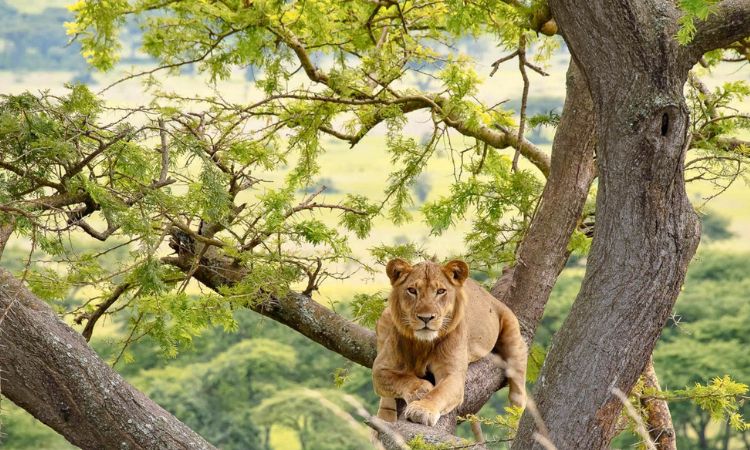
African Lion
The African lion, often dubbed the king of the jungle, is a powerful predator with males boasting impressive manes that can range from blond to black, serving as both protection and a display of dominance.
These social cats live in prides of up to 30 individuals, primarily in savannahs and grasslands where they hunt large prey like zebras and wildebeests, relying on teamwork for success.
Adults can weigh up to 550 pounds and measure over 10 feet in length, with a diet consisting mainly of meat from hunts or scavenged kills. Conservation status is vulnerable due to habitat loss and human-wildlife conflict, with populations declining across Africa.
Spotting lions on an African wildlife safari is moderately easy, especially during dawn or dusk when they’re active; their roars can echo for miles, alerting guides to their presence.
The best Africa parks to see lions include Tanzania’s Serengeti National Park, where vast plains allow for excellent visibility during the Great Migration, and Kenya’s Maasai Mara, famous for lion prides lounging in acacia trees or patrolling riverbanks. In Uganda, Queen Elizabeth National Park offers unique tree-climbing lions, adding a rare twist to sightings.

African Elephant
As the largest land mammal, the African elephant captivates with its massive size, intelligence, and complex social structures, forming matriarchal herds that communicate through low-frequency rumbles and protect calves fiercely. These herbivores inhabit savannahs, forests, and deserts, using their trunks for feeding on up to 300 pounds of vegetation daily, including grasses, leaves, and bark.
Bulls can reach heights of 13 feet at the shoulder and weigh over 14,000 pounds, while their tusks, made of ivory, unfortunately make them targets for poachers. Listed as vulnerable, conservation efforts focus on anti-poaching and habitat preservation.
On an Africa safari, elephants are relatively easy to spot due to their size and tendency to gather near water sources; listen for the rustling of branches or follow dust clouds from their movements.
Prime locations are Botswana’s Chobe National Park, home to the world’s largest elephant population, and Tanzania’s Tarangire National Park, where baobab trees attract herds during dry seasons. In Kenya, Amboseli National Park provides stunning views against Mount Kilimanjaro‘s backdrop.
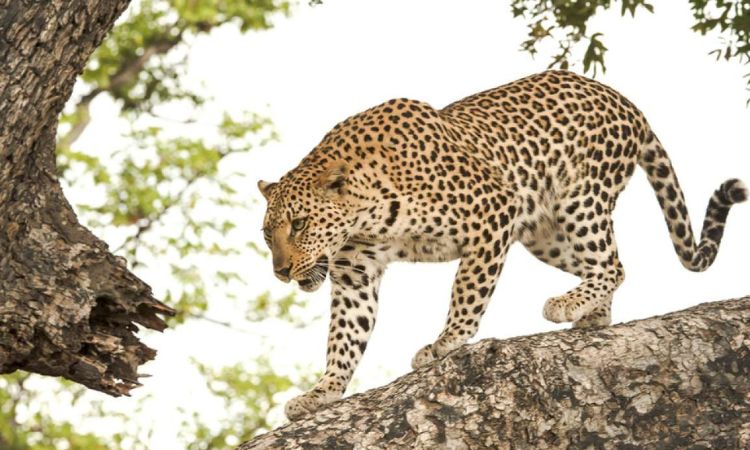
Leopard
The elusive leopard is a master of stealth, with its spotted coat providing perfect camouflage in trees and rocky terrains, allowing it to ambush prey like antelopes and monkeys from above.
Solitary and nocturnal, these adaptable cats thrive in diverse habitats from rainforests to mountains, weighing up to 200 pounds and feeding on a varied diet of small mammals, birds, and reptiles.
Their powerful jaws enable them to drag kills twice their weight into trees, avoiding scavengers. Conservation status is vulnerable, threatened by habitat fragmentation and illegal trade.
Spotting leopards requires patience and experienced guides, as they’re hard to see but thrilling when revealed; safaris at night increase chances. South Africa’s Sabi Sands Game Reserve excels for leopard sightings, with open borders to Kruger allowing free movement.
In Kenya, Samburu National Reserve offers rocky outcrops ideal for spotting them, while Uganda’s Murchison Falls National Park provides riverine habitats.
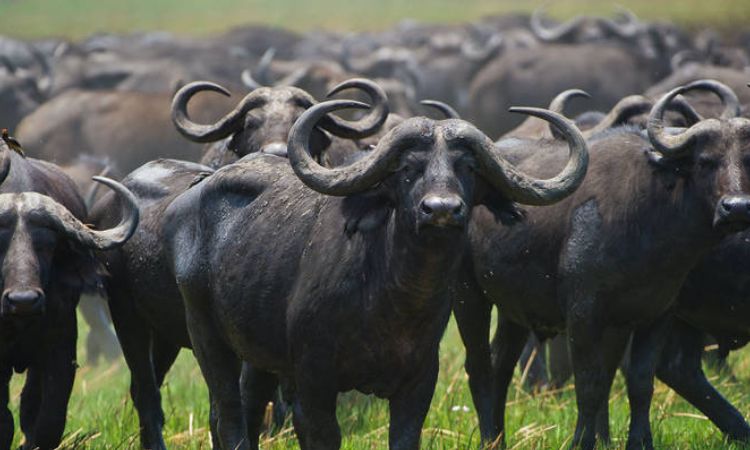
Cape Buffalo
Known for their formidable horns and herd mentality, Cape buffaloes are robust herbivores that form large groups for protection against predators, charging en masse when threatened.
They prefer grasslands and woodlands near water, grazing on tough grasses and weighing up to 2,000 pounds, with a diet focused on vegetation that sustains their bulk.
Often called “black death” due to their aggression, they’re one of Africa’s most dangerous animals. Conservation status is least concern, though local declines occur from disease and overhunting.
These Big Five animals are commonly spotted in herds during drives, easy to observe but approach with caution; their grunts and dust baths signal locations.
Tanzania’s Ngorongoro Crater is a hotspot, with dense populations in the caldera. Kenya’s Tsavo National Park hosts red-dusted “red elephants” alongside buffaloes, and South Africa’s Addo Elephant National Park protects thriving herds.

Rhinoceros
Rhinos, with their prehistoric appearance and thick skin, are divided into black and white species, both grazing or browsing on vegetation in savannahs and woodlands.
The white rhino, larger at up to 8,000 pounds, is more social and grass-dependent, while the black rhino is hook-lipped for browsing leaves. Both face critical endangerment from poaching for horns used in traditional medicine.
Spotting rhinos can be challenging due to their shyness and low numbers, but reserves with anti-poaching units offer better odds; look for tracks near mud wallows.
South Africa’s Hluhluwe-iMfolozi Park is renowned for white rhino conservation, while Kenya’s Ol Pejeta Conservancy hosts the last northern white rhinos. Namibia’s Etosha National Park provides arid settings for black rhino sightings at waterholes.
Other Iconic African Safari Mammals (Large Mammals)
Beyond the Big Five, Africa’s savannahs teem with other iconic mammals that enhance any safari animals experience, from towering herbivores to speedy predators.
These animals found in Africa contribute to the dynamic food web, with migrations and behaviors that create spectacular scenes, particularly in East African parks where open landscapes facilitate viewing.

Giraffe
The world’s tallest mammal, the giraffe uses its long neck to reach acacia leaves high above competitors, inhabiting savannahs and woodlands where it browses on foliage, consuming up to 75 pounds daily. Adults stand up to 18 feet tall and weigh 3,000 pounds, with unique spot patterns like fingerprints.
Conservation status is vulnerable due to habitat loss. Giraffes are easy to spot from afar due to their height; watch for them swaying gracefully or “necking” in fights. Kenya’s Giraffe Manor offers intimate encounters, but wild sightings shine in Tanzania’s Serengeti and Uganda’s Murchison Falls N.P.
Hippopotamus
Semi-aquatic giants, hippos spend days submerged in rivers and lakes to stay cool, emerging at night to graze on grasses, eating 80 pounds per session. They weigh up to 4,000 pounds and are territorial, with massive jaws capable of crushing boats.
Least concern overall, but vulnerable in some regions from habitat encroachment. Spotting is straightforward near water bodies; their yawns and grunts are giveaways. Botswana’s Okavango Delta is ideal, with canoe safaris, while Zambia’s Luangwa River hosts dense pods.
Plains Zebra
With striking black-and-white stripes for camouflage and confusion of predators, plains zebras roam grasslands in herds, grazing on short grasses and migrating for water. They weigh around 770 pounds and form social groups. Least concern, though local threats exist.
Easy to spot in large numbers during migrations; their barks signal alerts. Tanzania’s Serengeti witnesses the Great Migration, Kenya’s Maasai Mara follows suit, and South Africa’s Kruger adds variety.
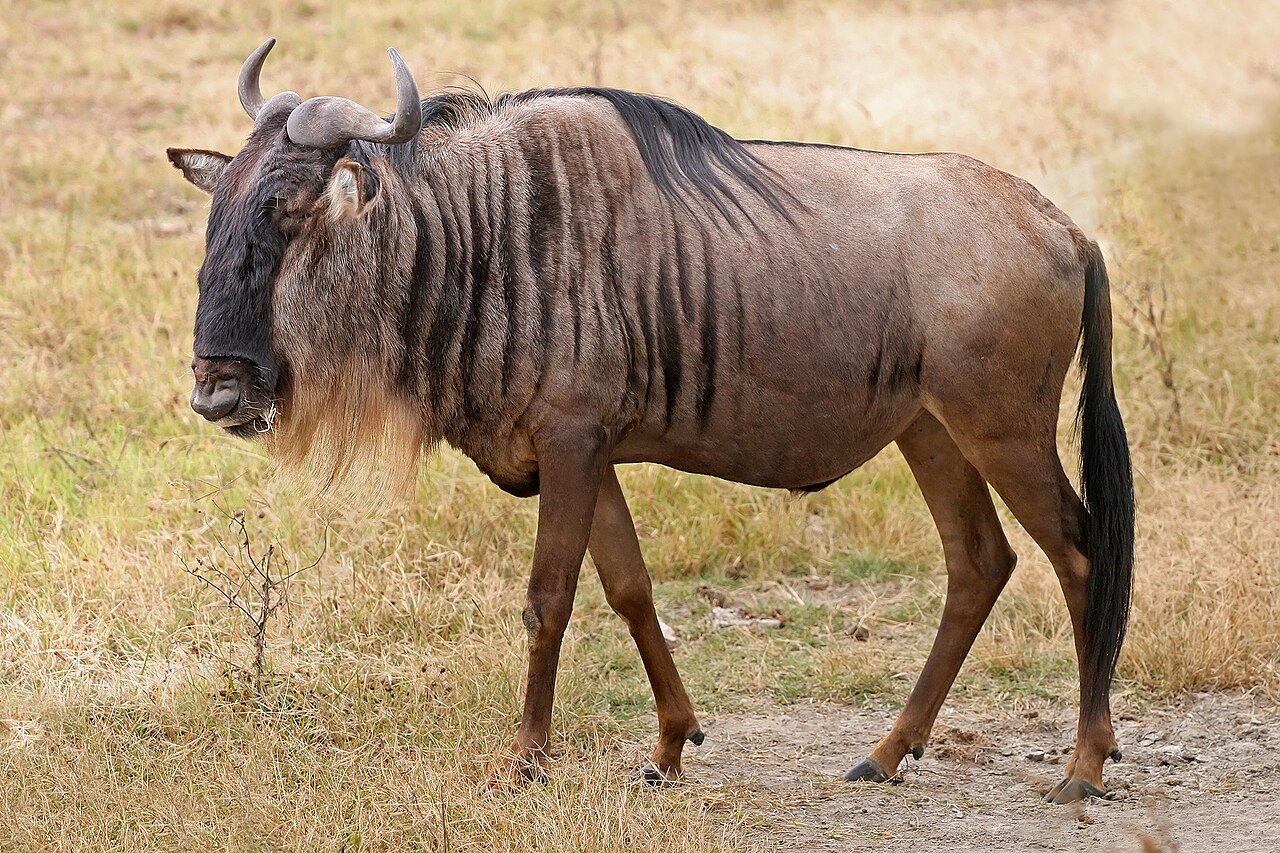
Wildebeest
Key players in the Great Migration, wildebeests are sturdy antelopes with curved horns, grazing on savannah grasses in massive herds that number millions. Weighing up to 600 pounds, their diet is herbivorous. Least concern, but migration perils include predators. Highly visible during crossings; follow the dust and lowing calls. Tanzania’s Serengeti and Kenya’s Maasai Mara are epicenters for this spectacle.
Cheetah
The fastest land animal, reaching 70 mph in sprints, cheetahs hunt gazelles in open plains with their slender build and spotted coats. Weighing 150 pounds, they eat small to medium prey. Vulnerable from low genetic diversity. Moderate difficulty to spot, as they’re diurnal but shy; look for coalitions on termite mounds. Namibia’s Etosha and South Africa’s Phinda Reserve offer prime viewing.
Hyena
Spotted hyenas are efficient scavengers and hunters with powerful jaws, living in clans in savannahs and feeding on carrion or live kills. Weighing 190 pounds, they’re matriarchal. Least concern. Common at kills; their whoops echo at night. Tanzania’s Ngorongoro Crater has high densities, Kenya’s Amboseli too.

African Wild Dog
Pack hunters with mottled coats, wild dogs pursue prey tirelessly in savannahs, eating meat from coordinated chases. Weighing 80 pounds, endangered from habitat loss. Hard to spot due to roaming; radio-collared packs help. Botswana’s Moremi Game Reserve is best, South Africa’s Madikwe follows.
Eland
The largest antelope, elands leap high and browse on leaves in woodlands, weighing 2,000 pounds with spiral horns. Least concern. Moderate spotting in open areas; their clicks are unique. Zimbabwe’s Hwange National Park excels, Namibia’s too.
Impala
Graceful antelopes with lyre-shaped horns, impalas leap 30 feet to escape predators in woodlands, grazing and browsing. Weighing 165 pounds, least concern. Abundant and easy to spot; alarm snorts warn. Widespread in Kruger, Serengeti.
Other africa wild animals you wouldnt want to miss on a safari include;
The warthog, with its tusks and warts, roots for tubers in grasslands, weighing 250 pounds, least concern, easy to spot kneeling to feed in Uganda’s Queen Elizabeth.
Baboons, intelligent big monkey troops in troops, forage omnivorously in varied habitats, weighing 90 pounds, least concern, highly visible and bold in Kenya’s Lake Nakuru.
Jackals, opportunistic carnivores in pairs, scavenge in savannahs, weighing 25 pounds, least concern, common at dusk in Tanzania’s Tarangire.
Servals, long-legged cats hunting rodents in grasslands, weighing 40 pounds, least concern, moderate spotting with night drives in Botswana.
Caracals, lynx-like with ear tufts, ambush birds in semi-deserts, weighing 42 pounds, least concern, elusive but seen in South Africa.
Meerkats, social burrowers in deserts, stand sentry for predators, weighing 2 pounds, least concern, easy in groups at Kalahari.
Aardvarks, nocturnal diggers for termites, in savannahs, weighing 140 pounds, least concern, rare nighttime sightings in Namibia.
Porcupines, quill-armed rodents foraging at night, in forests, weighing 60 pounds, least concern, occasional in Uganda.
Topi, fast antelopes on plains, weighing 350 pounds, least concern, visible in herds in Maasai Mara. Waterbuck, aquatic antelopes near water, weighing 550 pounds, least concern, common in Chobe.
This brings our count to more iconic safari animal examples, emphasizing the variety of animals wild animals in Africa.
Rare and Endangered African Safari Animals
Rare species add a layer of exclusivity to safaris, often requiring specialized treks into remote areas, highlighting conservation’s role in preserving Africa animals. These encounters foster awareness, with parks in Uganda, Rwanda, and Tanzania leading protection efforts.

Mountain Gorilla
Mountain gorillas, majestic silverback-led families thriving in the misty montane forests of East Africa, captivate adventurers on an Africa gorilla safari. These critically endangered primates, weighing up to 400 pounds (with silverbacks often larger), inhabit high-altitude bamboo and cloud forests at elevations of 8,000–13,000 feet, where their thick fur protects against chilly temperatures.
They forage primarily on vegetation like leaves, stems, and shoots, spending much of their day feeding and resting in cohesive groups led by a dominant silverback.
Gorilla trekking offers an intimate, once-in-a-lifetime experience: guided hikes through dense jungles lead to habituated groups, allowing visitors to spend one magical hour observing behaviors up close—playful juveniles, nurturing mothers, and commanding silverbacks—while maintaining a safe 7-meter distance.
The trek is moderately challenging, involving steep, muddy trails, but highly rewarding with emotional encounters that highlight conservation success; populations have increased thanks to dedicated protection against poaching and habitat loss.
Top destinations include Uganda’s Bwindi Impenetrable Forest National Park, home to over half the world’s mountain gorillas across multiple sectors for varied trekking, and Volcanoes National Park Rwanda, known for easier access and luxury lodges.
A gorilla trekking permit is essential—costing $800 in Uganda for foreign non-residents or $1,500 in Rwanda—and must be booked 3–12 months in advance.

Chimpanzee
Our closest relatives, chimpanzees use tools in rainforests, omnivorous diets, weighing 150 pounds in troops. Endangered. Easy to spot with trackers; their calls resonate. Uganda’s Kibale National Park offers chimp habituation, Tanzania’s Mahale Mountains too.
Pangolin
Scaled anteaters curling into balls, pangolins eat insects in savannahs, weighing 70 pounds, critically endangered from trafficking. Extremely hard to spot, nocturnal and shy; rare safaris in Zimbabwe.
Black Rhino
Browsing rhinos with hooked lips, in thickets, weighing 3,000 pounds, critically endangered. Challenging due to wariness; sanctuaries help. Kenya’s Lewa Conservancy, Namibia’s deserts.
Grevy’s Zebra
Larger striped zebras in arid lands, grazing, weighing 990 pounds, endangered. Moderate in reserves; waterholes key. Kenya’s Samburu.
Okapi
Forest giraffes with striped legs, browsing in Congo rainforests, weighing 550 pounds, endangered. Very rare; specialized tours in Democratic Republic of Congo.
Adding depth, the forest elephant, smaller tusked in jungles, vulnerable, hard in Gabon. Bonobo, peaceful big monkey in Congo, endangered, treks required. African penguin, coastal, endangered, easy at Boulders Beach South Africa.
Dugong, marine grazers, vulnerable, rare in Mozambique. Wild ass, desert dwellers, critically endangered, elusive in Ethiopia. This enhances the rare safari animals narrative.
African Safari Birds You Must See
These spectacular birds elevate every African wildlife safari, adding brilliant colors, dramatic behaviors, and unique calls to mammal-focused game drives across East and Southern Africa’s premier reserves.
African Fish Eagle
Raptors with white heads, perching near water to snatch fish, wingspan 8 feet, least concern. Easy to spot calling; lakeside. Kenya’s Lake Naivasha, Uganda’s Kazinga Channel.

Shoebill Stork
The prehistoric shoebill stork, standing up to 5 feet tall with its enormous shoe-shaped bill, patiently stalks lungfish, frogs, and small reptiles in dense papyrus swamps. Classified as vulnerable due to wetland drainage, it remains motionless for long periods, making sightings exciting yet unpredictable.
Moderate difficulty; best viewed on slow boat trips through marshes during early morning or late afternoon. Top parks: Uganda’s Mabamba Swamp, world-famous for reliable close encounters via canoe, Murchison Falls National Park , Albert Delta boat safaris, Zambia’s Bangweulu Wetlands, and occasional sightings in Tanzania’s Rubondo Island.
Secretary Bird
The striking secretary bird, a 4-foot-tall long-legged raptor, strides confidently across open grasslands, using powerful kicks to stun and kill snakes, lizards, and insects. Vulnerable from habitat loss and poisoning, it sports a quill-like crest and hunts methodically in savannahs.
Easily visible striding or perched on low trees/termite mounds during game drives. Best parks include Tanzania’s Serengeti National Park, Kenya’s Maasai Mara, South Africa’s Kruger National Park, Namibia’s Etosha, and Botswana’s Okavango fringes.
Ostrich
Africa’s largest bird, the ostrich reaches 9 feet tall and sprints up to 45 mph across open savannahs, foraging on seeds, plants, and insects with powerful legs for defense. Least concern status; males display black-and-white feathers while females are brownish for camouflage. Very easy to spot in flocks or pairs due to towering height and distinctive running gait.
Best park in Africa to see ostriches include Namibia’s Etosha National Park (large groups around waterholes), South Africa’s Kruger, Tanzania’s Serengeti, Kenya’s Maasai Mara, and Botswana’s Kalahari regions.

Grey Crowned Crane
The elegant grey crowned crane, standing 3 feet tall with a golden feather crown and red throat pouch, performs elaborate courtship dances with bows, leaps, and booming calls in wetland edges.
Endangered from habitat loss; it forages in pairs or small groups on grasses and insects. Common and easy to observe striding or displaying near marshes.
Best parks: Uganda’s Queen Elizabeth National Park, Murchison Falls, Rwanda’s Akagera, Tanzania’s Serengeti fringes, and Kenya’s Amboseli near swamps.
Lilac-breasted Roller
The dazzling lilac-breasted roller flashes vivid lilac, turquoise, and green plumage while perching on acacia branches or wires, hawking insects in acrobatic flights. Least concern; thrives in open woodlands and savannahs, often seen in pairs.
Easy to spot thanks to bright colors contrasting against thorny trees. Best parks: Kenya’s Maasai Mara and Tsavo, Tanzania’s Serengeti and Tarangire, Botswana’s Moremi, and Zambia’s South Luangwa for stunning perched and flight views.
Kori Bustard
The world’s heaviest flying bird, the Kori bustard struts through grasslands; males inflate throat pouches for booming courtship displays. Vulnerable in parts due to habitat loss; forages on insects, seeds, and small vertebrates.
Visible in open savannahs, often solitary or in small groups. Best parks: Tanzania’s Serengeti and Ngorongoro Crater (expansive grasslands), Selous Game Reserve, Namibia’s Etosha, and Botswana’s Central Kalahari for reliable sightings.
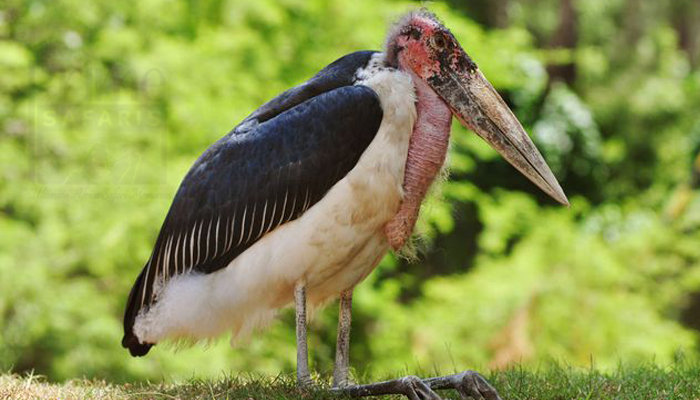
Marabou Stork
Known as the “undertaker bird” for its cloak-like wings and bald head, the marabou stork scavenges carrion, fish waste, and garbage near human settlements and wetlands. Least concern due to high adaptability. Common around dumps, markets, or perched in trees in urban and park settings.
Best parks: Urban Uganda, Kampala streets, Queen Elizabeth National Park, Kenya’s Nairobi fringes, and Tanzania’s wetland edges.
Vulture (Various Species)
Vultures, including white-backed and hooded species, are vital scavengers that circle high above kills and descend in large numbers to clean carcasses.
Some species critically endangered from poisoning. Spotted soaring or feeding at predator leftovers. Best parks: South Africa’s Kruger National Park (multiple species at kills), Tanzania’s Serengeti, Kenya’s Maasai Mara, and Botswana’s Khwai for dramatic feeding scenes.
Flamingo (Pink Flocks)
Flamingos gather in massive pink flocks on alkaline lakes, filtering algae and brine shrimp with specialized bills. Least concern for lesser flamingos, though numbers fluctuate with water levels.
Extremely easy and photogenic in huge congregations. Best parks: There are millions at Kenya’s Lake Nakuru and Lake Bogoria, current hotspot, and Tanzania’s Lake Natron, a breeding site.
Reptiles and Unique Safari Species
Reptiles bring ancient intrigue to African safari animals, often seen basking, lurking, or slithering in rivers, rocks, and forests during game drives and walks.
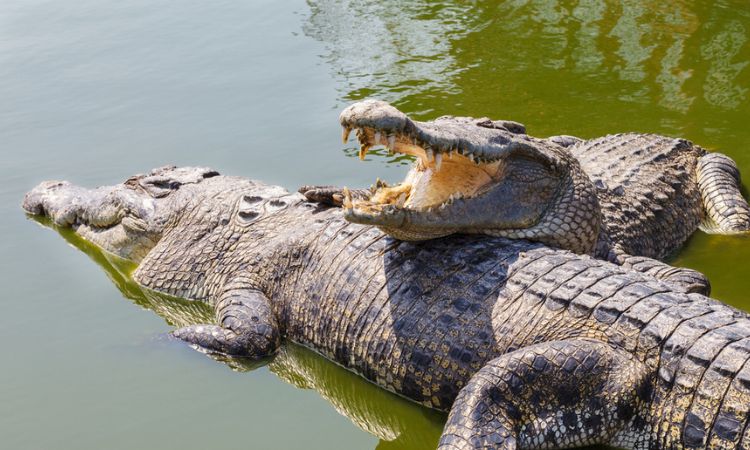
Nile Crocodile
The massive Nile crocodile, reaching over 20 feet, is an ambush predator that lurks in rivers to snatch fish, mammals, and carrion with crushing jaws.
Least concern but locally threatened. Easy to spot sunbathing on banks or eyes just above water. Best parks: Botswana’s Chobe River, Uganda’s Murchison Falls, Tanzania’s Grumeti, and Kenya’s Mara River.
African Rock Python
The non-venomous African rock python, growing up to 20 feet, constricts rodents, birds, and mammals, often coiling in trees or on the ground. Least concern but secretive.
Moderate difficulty; look for coiled shapes or drag marks on night drives. Best parks: South Africa’s Kruger, Kenya’s Tsavo, Tanzania’s Selous, and Uganda’s Semuliki for impressive sightings.
Monitor Lizard
The large Nile monitor lizard, up to 7 feet long, forages along rivers and rocks, eating eggs, fish, carrion, and small prey with a keen sense of smell. Least concern and adaptable.
Common scampering on ground or climbing; frequently near water. Best parks: South Africa’s Kruger, Namibia’s Fish River Canyon, Kenya’s Hell’s Gate, and Tanzania’s Ruaha.
Chameleon
Chameleons are famous for color-changing camouflage and long projectile tongues used to catch insects in forests and woodlands. Status varies by species; many are elusive.
Hard to spot but rewarding on slow forest walks—look for subtle movement on branches. Best parks: Uganda’s Rwenzori and Bwindi where you find three-horned varieties, Kenya’s Kakamega, Tanzania’s Usambara, and South Africa’s Garden Route.
Expanding, add leopard tortoise, slow grazers, vulnerable, easy in grasslands Addo. Puff adder, venomous ambushers, least concern, paths careful Kenya.
Best African Countries to See Safari Animals
Choosing the right country maximizes your safari animals sightings, with East Africa leading for diversity.
Uganda shines for primates like mountain gorillas in Bwindi and chimpanzees in Kibale, alongside Big Five in Queen Elizabeth, making it ideal for combined wildlife and cultural safaris.
Kenya Maasai Mara offers the Great Migration of wildebeests and zebras, with lions and cheetahs in abundance, plus cultural interactions with Maasai communities for an immersive experience.
Tanzania Serengeti and Ngorongoro provide endless plains for spotting elephants, rhinos, and birds, with Zanzibar extensions for beach relaxation.
Rwanda focuses on gorilla trekking in Volcanoes National Park, with emerging Big Five options in Akagera. South Africa delivers accessible safaris in Kruger, with luxury lodges and wine regions nearby.
Botswana‘s Okavango Delta excels in water-based adventures for hippos and crocodiles, emphasizing low-impact tourism.
Each country tailors to different preferences, from budget backpacking in Uganda to high-end in Botswana, ensuring varied African wildlife safari opportunities.
Best Time to See African Safari Animals
Timing your safari aligns with animal behaviors for optimal viewing of animals found in Africa. The dry season (June to October) concentrates wildlife at waterholes, making spotting easier in parks like Serengeti and Maasai Mara, where visibility is high and roads accessible.
Wet season (November to May) brings lush landscapes, bird migrations, and fewer crowds, ideal for photography in Uganda’s forests or Kenya’s reserves, though mud can challenge drives.
The Great Migration peaks July to October in Maasai Mara for river crossings, while gorilla trekking in Uganda and Rwanda is year-round but drier months reduce slips.
Calving seasons in February draw predators, enhancing action in Tanzania. Avoid peak heat or rains by consulting local forecasts, ensuring your trip captures the dynamic essence of Big Five animals and beyond.
FAQs African Safari Animals
What animals will I see on an African safari?
On an African safari, expect a mix of the Big Five, herbivores like zebras and giraffes, predators such as cheetahs, and birds plus reptiles, depending on the park and season.
Which country has the most safari animals?
Tanzania boasts exceptional diversity with the Serengeti hosting millions during migrations, followed closely by Kenya and South Africa for varied ecosystems.
Are African safari animals dangerous?
While some like lions and buffaloes can be dangerous if provoked, guided safaris maintain safe distances, emphasizing respect for wildlife.
Can I see gorillas on safari?
Yes, gorilla trekking safaris in Uganda and Rwanda offer intimate encounters with habituated groups in forests, requiring permits and fitness.