10 Intriguing Facts about a Chacma Baboon: Size, Teeth, Weight, & more
Chacma Baboon: The chacma baboon, scientifically known as Papio ursinus and also known as the Cape baboon, is one of the largest and most captivating primates in Africa, enchanting researchers, wildlife enthusiasts, and tourists with its complex social structures, remarkable adaptability, and occasionally mischievous behavior.
As a species of Old World monkey native to southern Africa, it belongs to the genus Papio, alongside the olive, yellow, hamadryas, and Guinea baboons, and plays a vital role in the continent’s ecosystems due to its dynamic presence and ecological contributions.
Chacma baboon characteristics
What is a Chacma Baboon?
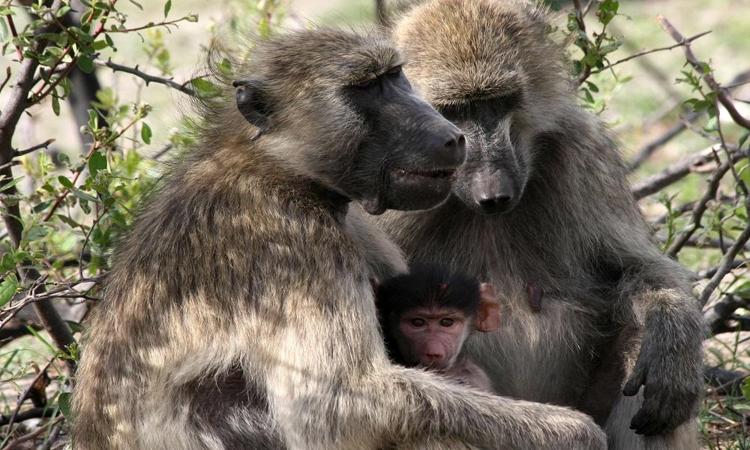
The chacma baboon boasts a robust, muscular build with dark gray to brownish fur that varies by region. Its dog-like muzzle, prominent brow ridges, and large, sharp canines—especially in males—define its striking face.
The hairless, moist rhinarium enhances smell, while a short, bent tail aids balance. Males have a pronounced mane, and both sexes feature calloused, bright pink ischial pads for sitting. Their expressive faces and agile limbs reflect adaptability across diverse habitats.
Chacma Baboon Size
Chacma baboons are among the largest Old World monkeys, with males measuring up to 1.5 meters (4.9 feet) in length, including their tail, and females slightly smaller.
Their robust build supports their adaptability across diverse habitats, from savannas to mountains. Size varies by sex and region, with males typically larger, aiding in dominance displays and predator defense.
Weight
Male chacma baboons weigh between 30–40 kg (66–88 lbs), while females are lighter, averaging 15–20 kg (33–44 lbs). This sexual dimorphism reflects their roles in troop dynamics, with heavier males leading and protecting.
Weight can fluctuate based on food availability and habitat, with coastal populations sometimes heavier due to richer diets. Their robust weight supports foraging and survival in harsh environments.
Height
Chacma baboons stand about 50–70 cm (20–28 inches) at the shoulder when on all fours, with males slightly taller than females. When standing upright, they can reach up to 1.2 meters (3.9 feet).
Their height aids in spotting predators and foraging in varied terrains like savannas or cliffs. This stature, combined with agility, supports their dominance and survival in complex social groups.
Chacma Baboon Teeth
Chacma baboons possess large, sharp canine teeth, especially in males, which can exceed 5 cm (2 inches) in length—larger than a leopard’s. These teeth are used for defense, dominance displays, and foraging.
Females have smaller canines but sharp incisors for grooming and feeding. Their dental structure supports an omnivorous diet, from tough roots to small prey, reflecting their adaptability.
Chacma Baboon Rhinarium
The chacma baboon’s rhinarium, or wet nose, is a hairless, moist muzzle tip that enhances their sense of smell. This feature, resembling a dog’s nose, aids in detecting food, predators, and social cues like pheromones.
The rhinarium’s sensitivity supports foraging in diverse habitats and communication within troops, playing a key role in their survival and social interactions across southern Africa’s ecosystems.
Chacma Baboon Habitat: Where Do Chacma Baboons Live
Chacma baboons are highly adaptable and thrive in a variety of environments, from savannas and woodlands to mountainous regions and coastal areas.
They are primarily found in southern Africa, including countries like South Africa, Namibia, Botswana, Zimbabwe, and Angola.
One of their most famous habitats is the Cape Peninsula in South Africa, where they are often spotted foraging near human settlements.
Their ability to survive in diverse habitats, including semi-arid regions and high-altitude areas, showcases their resilience. However, this adaptability sometimes brings them into conflict with humans, especially in urban areas where they raid crops or rummage through garbage.
For those researching chacma baboon habitat, it’s worth noting that they prefer areas with access to water, trees for sleeping, and abundant food sources.
Behavior and Social Structure
Chacma baboons exhibit complex behaviors and intricate social structures, making them a fascinating subject for study. Living in troops of 20 to over 100 individuals, they form hierarchical societies led by a dominant male, or alpha, who maintains order and protects the group from predators like leopards or hyenas.
Social bonds are strengthened through grooming, which reduces tension and fosters alliances. Their intelligence shines in problem-solving, such as foraging strategies or navigating human environments, often leading to conflicts in urban areas like Cape Town.
Chacma baboons display a range of emotions, from aggression in male dominance contests to nurturing behaviors in females, reflecting their dynamic social interactions.
Chacma Baboon Social Structure
Troops are organized around a matrilineal core, with females forming stable hierarchies based on lineage. Males compete for dominance, with the alpha securing mating rights. Subordinate males may form alliances to challenge the alpha, creating fluid power dynamics.
How Do Chacma Baboons Communicate?
Communication involves vocalizations like barks, screams, and grunts, alongside facial expressions, body postures, and grooming. Loud calls signal danger, while subtle gestures maintain social bonds or assert dominance.
Chacma Baboon Family Life
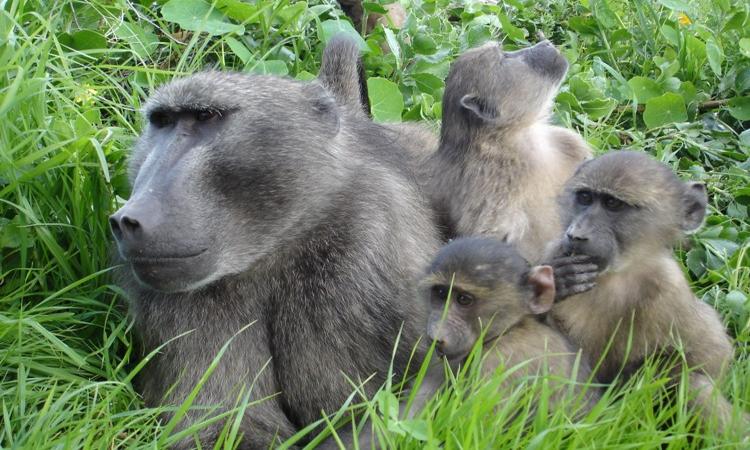
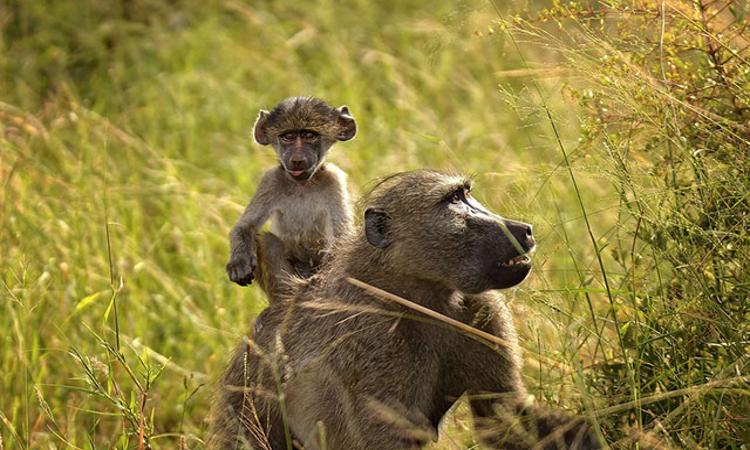
Females primarily care for infants, with alloparenting common, where other troop members assist. Infants cling to their mothers, and strong maternal bonds ensure survival amidst threats like predation or infanticide by new alphas.
Diet and Foraging Habits
Chacma baboons, adaptable omnivores, thrive across southern Africa’s diverse landscapes. Their foraging behavior is highly strategic, with troops splitting into smaller groups to cover more ground.
They use their keen sense of smell and sharp eyesight to locate food, and their dexterity allows them to dig for roots, catch small prey, or raid human crops and garbage, sparking conflicts in urban areas like Cape Town.
Their diet varies by habitat, from savannas to coastal regions, ensuring survival in challenging environments. This flexibility underscores their resilience and ecological role as seed dispersers
What do chacma baboons eat are common?
They consume fruits, leaves, roots, insects, small mammals, and coastal shellfish. Their diet shifts seasonally, including grasses, seeds, and bark when food is scarce, reflecting their opportunistic feeding habits
Reproduction and Life Cycle
These have a polygynous mating system, where dominant males mate with multiple females. Females reach sexual maturity around 4–5 years, while males mature later, around 6–7 years.
After a gestation period of about six months, females give birth to a single infant, which clings to its mother’s chest for the first few months.
Infants are vulnerable to predation and infanticide, particularly when a new alpha male takes over a troop. However, strong social bonds within the troop help protect young baboons, ensuring the survival of the next generation.
Chacma Baboon Lifespan
These baboons typically live up to 30 years in the wild, though they can reach 45 years in captivity. Their lifespan is influenced by factors like predation, food availability, and human-wildlife conflict. Strong social bonds and adaptability help them survive in diverse southern African habitats.
Conservation Status and Threats
While they are not currently endangered, they face several threats. Habitat loss due to agriculture, urban expansion, and deforestation is a significant concern.
Additionally, chacma baboon human conflict is a growing issue, particularly in areas like the Cape Peninsula, where baboons are sometimes killed or relocated due to their raids on human settlements.
Conservation efforts focus on mitigating these conflicts through education, better waste management, and the creation of buffer zones between human and baboon habitats.
Chacma Baboons and Humans
The chacma baboon-human interaction is a double-edged sword. On one hand, their bold and curious nature makes them a tourist attraction, especially in places like Cape Town’s Table Mountain National Park.
On the other hand, their proximity to human settlements, like the chacma baboon Cape Town, leads to negative perceptions, as they’re often seen as pests.
Efforts to manage these interactions include using baboon monitors—trained individuals who guide baboons away from urban areas—and educating communities about securing food and waste. These strategies aim to reduce conflict while preserving the baboons’ natural behaviors.
Fun Facts About Chacma Baboons
To wrap up this guide, here are some chacma baboon facts that spark curiosity:
- Impressive Canines: Male chacma baboons have canines larger than those of leopards, used for defense and dominance displays.
- Long Lifespan: In the wild, they can live up to 30 years, though captivity extends this to 45 years.
- Cultural Significance: In some African cultures, baboons are seen as symbols of wisdom or trickery, often appearing in folklore.
- Tool Use: While not as advanced as chimpanzees, these baboons have been observed using sticks or stones to access food.