Why Is the Hippo Not in the Big 5? A Fascinating Insight
Wondering Why Is the Hippo Not in the Big 5? Discover the history behind Africa’s famous Big 5 animals, how the list was created by hunters, and why the dangerous hippopotamus was excluded despite being one of Africa’s most formidable wildlife species
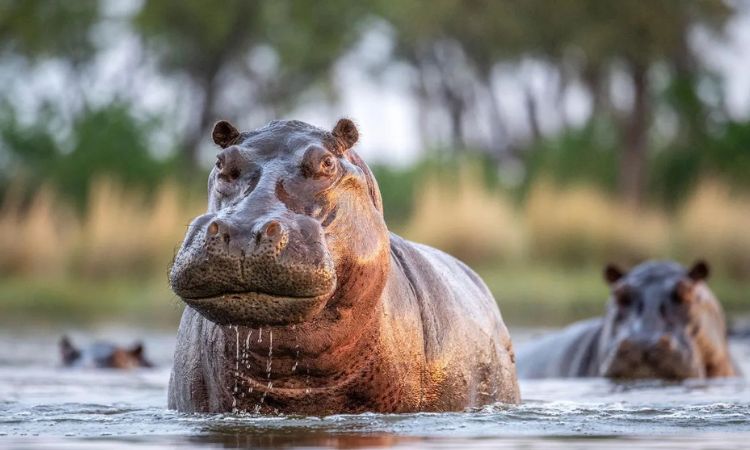
The question comes up on almost every African safari. You have spent the morning watching a hippo pod explode from a riverbank, seen the sheer mass of an adult male rear out of the water in territorial display, heard the deep bass honking that carries across a kilometre of open water at dawn, and you find yourself wondering: how is this animal one of the largest, most dangerous, and most visually arresting creatures in Africa and not included in the Big 5? Lions, leopards, elephants, buffalos, and rhinos get the title.
The hippopotamus, despite being responsible for an estimated 500 human deaths per year and despite being the third largest land mammal on earth, is entirely absent from the list.
The answer has nothing to do with the hippo’s size, its danger, its charisma, or its abundance. It has everything to do with the list’s origin and understanding where the Big 5 actually came from explains immediately why the hippo was never considered for inclusion.
The Big 5 Was Never About Wildlife Viewing — It Was About Trophy Hunting
The Big 5 was coined by big game hunters, not safari guides or wildlife photographers. The term originated in the nineteenth century among professional hunters operating in colonial Africa, men who were paid to guide wealthy European and American clients on trophy hunting expeditions and who ranked the continent’s animals not by their size or their visual drama but by the degree of danger they posed when hunted on foot.
The Big 5, lion, leopard, elephant, Cape buffalo, and rhinoceros — were designated as the five most dangerous and most difficult animals to hunt on foot.
Each was considered extremely dangerous to approach in thick bush, each was known for unpredictable and lethal charges when wounded, and each represented a genuine mortal risk to the hunter pursuing it with the firearms technology of the late nineteenth century. These were the animals whose pursuit required the highest degree of hunting skill and courage — and whose trophies were therefore the most prestigious to display.
The hippopotamus was excluded from this ranking for one simple reason: hippos were not typically hunted on foot through bush.
They were hunted primarily from boats or from the water’s edge, where the dynamics of the encounter were entirely different from the dangerous close-quarters tracking of a buffalo through thick undergrowth or a leopard through dense thornbush.
The fundamental criterion for Big 5 status was the specific danger an animal posed to a hunter pursuing it on foot in its natural habitat — and the hippo’s aquatic character removed it from that category regardless of how lethal it was in other contexts.
The Hippo’s Actual Danger Profile — More Lethal Than Most Big 5 Members
The irony in the hippo’s exclusion from the Big 5 is that by the metric most meaningful to modern observers — lethality to humans — the hippopotamus arguably outperforms several of the animals that made the list.
Hippos are considered one of Africa’s most dangerous animals, responsible for an estimated 500 deaths per year across the continent.
They are extraordinarily aggressive in defence of territory and calves, capable of running at speeds of up to 30 kilometres per hour on land despite their bulk, and equipped with canine teeth — tusks — that can reach 50 centimetres in length in adult males and exert crushing pressure sufficient to destroy a small boat.
Their territorial behaviour is particularly lethal. Hippos spend their days in water to regulate their body temperature and skin moisture, and they defend those water territories with a ferocity that makes any approaching watercraft — canoe, dugout, motorised skiff — a target if it enters a zone the resident hippo considers its own.
On land, hippos feeding at night are easily startled and will charge any perceived threat along the path between their feeding ground and the water, and any human caught between a hippo and its river is in immediate and serious danger.
None of this changed the Big 5 designation, because the designation was never a ranking of overall danger to humans — it was a specific ranking of danger to hunters pursuing the animal on foot with rifles in its natural bush habitat.
Why the Hippo Is Still Left Out When the Big 5 Term Is Used for Safari Tourism
When African tourism adopted the Big 5 terminology in the twentieth century — marketing the phrase to wildlife tourists rather than trophy hunters — the original list was carried over unchanged, along with its original membership.
The term had acquired enough brand recognition and cultural currency that altering it would have created more confusion than clarity, and so the Big 5 remained lion, leopard, elephant, buffalo, and rhino even as the context shifted entirely from hunting to wildlife photography and game viewing.
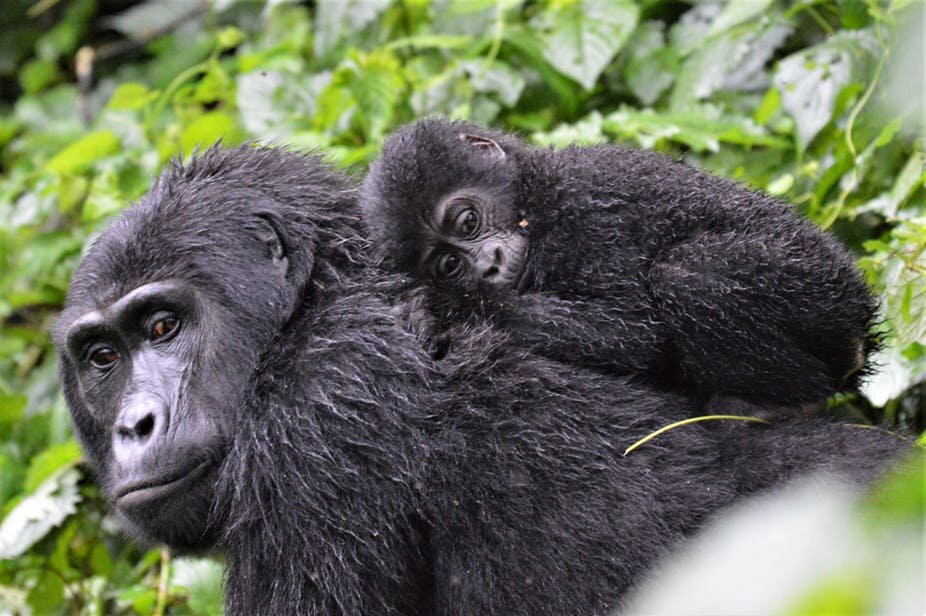
Some wildlife tourism operators and conservation organisations have proposed alternative lists — the Ugly Five (hyena, warthog, vulture, marabou stork, and wildebeest), the Little Five (elephant shrew, ant lion, rhinoceros beetle, buffalo weaver, and leopard tortoise), the Shy Five (aardvark, aardwolf, porcupine, meerkat, and bat-eared fox) — as ways to diversify the tourism conversation and draw attention to Africa’s lesser-discussed wildlife. Some have proposed a New Big 5 for wildlife photography that includes the hippo alongside gorillas, lions, elephants, and cheetahs. But the original Big 5 terminology, despite its hunting origins, has proved remarkably resistant to revision in mainstream safari marketing.

What the Hippo’s Exclusion Actually Tells Us About the Big 5
The hippo’s absence from the Big 5 is, in the end, a reflection of the list’s historical origins rather than any genuine judgment about the animal’s significance, danger, or worthiness of attention.
The Big 5 was never a scientific ranking, never a comprehensive assessment of Africa’s most important wildlife, and never designed with the modern safari visitor in mind.
It was a hunter’s shorthand for the five animals that made their pulse quicken most and the hippo, encountered from boats rather than tracked through bush, simply didn’t fit the specific danger profile the list was measuring.
For anyone on an African safari asking why the hippo is not in the Big 5 — the answer is: because the people who created the list were never standing on foot in the riverbank grass when an adult male hippopotamus decided they were in the wrong place. If they had been, the list might look very different.