
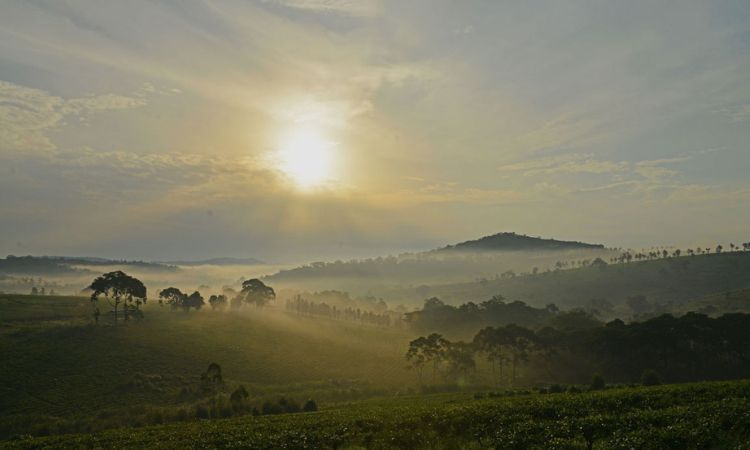
Uganda Weather: Climate, Seasons & Best Time to Visit
Uganda weather is characterized by its equatorial location, resulting in a tropical climate with relatively stable temperatures year-round. Unlike many countries with distinct hot and cold seasons, Uganda experiences moderate temperatures influenced heavily by altitude and proximity to large bodies of water like Lake Victoria.
Daytime highs typically range from 25–30°C (77–86°F), while nights can drop to 15–20°C (59–68°F), especially in higher elevations.
The country features two main dry seasons and two rainy seasons, with variations by region. Lowland areas are warmer and more humid, while highlands and mountainous regions such as the Rwenzori Mountains or Bwindi Impenetrable Forest are cooler and often wetter due to orographic rainfall.
Uganda’s climate is generally pleasant for travel, but rainfall can impact road conditions, trekking trails, and wildlife visibility.
Uganda Weather by Season
Uganda has bimodal rainfall patterns in most areas, leading to:
- Dry Seasons:
- December–February: Often the warmer and drier period, with January and February being particularly sunny and hot in many areas. This is ideal for outdoor activities, as vegetation is thinner, making wildlife spotting easier in savanna parks.
- June–August: The second dry season, with comfortable temperatures and low rainfall. These months are popular for safaris and trekking due to clearer skies and drier trails.
- Rainy Seasons:
- March–May (long rains): Heavier and more prolonged showers, peaking in April. This brings lush greenery but can make roads muddy and trekking challenging.
- September–November (short rains): Lighter rains compared to the long season, with occasional heavy downpours. Wildlife viewing can be good as animals concentrate around water sources.
Rain is possible any month due to the equatorial climate, but dry periods offer more predictable weather.
Uganda Weather by Month
Here’s a detailed monthly breakdown, focusing on average conditions (primarily based on central/southern Uganda like Kampala/Entebbe; northern areas are hotter/drier, highlands cooler).
- January: Dry and warm. Average temps 18–29°C (64–84°F), low rainfall (~50–70 mm). Great for safaris and trekking with minimal mud.
- February: One of the driest and hottest months. Temps 18–29°C (64–84°F), rainfall ~60–80 mm. Excellent wildlife viewing as animals gather at waterholes.
- March: Transition to long rains. Temps 18–28°C (64–82°F), rainfall increases (~130–150 mm). Lush landscapes, but afternoon showers common.
- April: Wettest month in many areas. Temps 18–27°C (64–81°F), heavy rainfall (~180–200 mm). Muddy trails; fewer crowds but potential flooding.
- May: Still rainy but tapering. Temps 17–27°C (63–81°F), rainfall ~130–170 mm. Greenery peaks; good for birdwatching.
- June: Start of dry season. Temps 17–27°C (63–81°F), lower rainfall (~70–90 mm). Comfortable for all activities.
- July: Peak dry season. Temps 16–26°C (61–79°F), very low rain (~60–80 mm). Ideal weather; high season for visitors.
- August: Dry with occasional showers. Temps 17–27°C (63–81°F), rainfall ~80–120 mm. Good for safaris and trekking.
- September: Short rains begin. Temps 17–28°C (63–82°F), rainfall ~100–140 mm. Lush but manageable.
- October: Rainier. Temps 17–28°C (63–82°F), higher rainfall (~130–160 mm). Wildlife concentrated; variable conditions.
- November: Short rains peak. Temps 17–27°C (63–81°F), rainfall ~140–170 mm. Afternoon storms; great for migratory birds.
- December: Transition to dry. Temps 17–28°C (63–82°F), rainfall ~90–120 mm. Sunny spells increase; good start to peak season.
These are averages; northern lowlands can hit 32–35°C (90–95°F) in dry months, while mountains drop to 10–15°C (50–59°F) at night.
Average Temperatures in Uganda
Temperatures remain consistent due to the equatorial position, but altitude creates variations:
- Kampala (central, ~1,200m): Daytime 27–29°C (81–84°F), nights 17–18°C (63–64°F).
- Entebbe (near Lake Victoria): Slightly milder, 25–27°C (77–81°F) highs, cooler nights.
- Bwindi Impenetrable Forest (western highlands): Cooler, 24–25°C (75–77°F) days, nights as low as 13–15°C (55–59°F).
- Murchison Falls National Park (northern): Warmer, up to 32°C (90°F) or more in dry season.
- Rwenzori Mountains: High altitudes mean much cooler temps, even frost at peaks.
Daytime warmth is tempered by altitude, making Uganda comfortable compared to other equatorial regions.
Rainfall Patterns in Uganda
Annual rainfall averages 1,000–1,500 mm (39–59 inches) in most areas, higher near Lake Victoria and western mountains (up to 2,000 mm/79 inches), lower in the northeast (e.g., Kidepo ~650 mm/26 inches).
- Wettest months: April (long rains peak), November (short rains).
- Driest months: January–February, July.
- Rainfall often comes in short, intense afternoon showers, leaving mornings clear.
- Heavy rains can make dirt roads impassable and gorilla trekking trails slippery/muddy, but wildlife viewing improves in dry seasons when animals cluster at water sources.
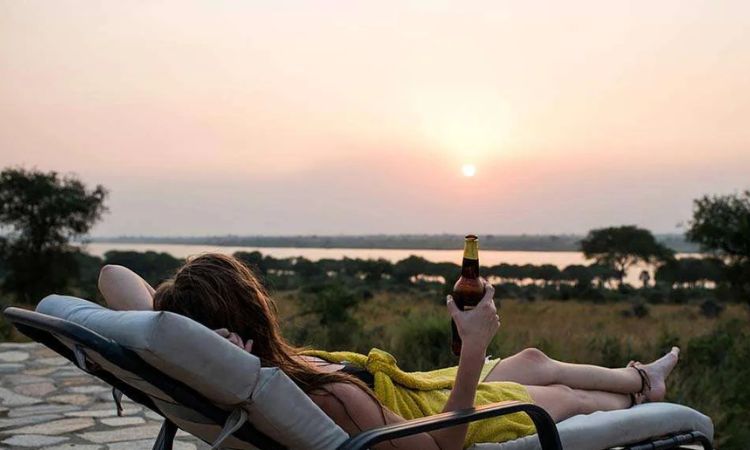
Best Time to Visit Uganda
The best time depends on your activities, but dry seasons (December–February and June–August) are generally ideal for most travelers.
- Gorilla Trekking (Bwindi/Mgahinga): Dry seasons for easier, less muddy trails. June–August and December–February offer the best conditions; permits book up fast.
- Chimpanzee Tracking (Kibale): Similar to gorillas; dry months preferred, but rainy seasons bring lush forests and active primates.
- Wildlife Safaris (Queen Elizabeth, Murchison Falls): End of dry seasons (February–March, September–October) for concentrated game viewing; June–August for comfortable weather.
- Birdwatching: November–April for migratory birds (over 1,000 species total); peak arrivals in wet seasons.
- Hiking & Mountaineering (Rwenzori, Mt. Elgon): Dry seasons to avoid excessive mud and rain; June–August best for clearer paths.
Overall, June–August combines pleasant weather, dry conditions, and peak wildlife activity, though it’s busier and pricier.
Uganda Weather by Region
- Central Uganda (Kampala, Entebbe): Moderate, humid due to Lake Victoria influence. Bimodal rains, temps 22–29°C (72–84°F).
- Northern Uganda (Murchison Falls, Kidepo N.P): Hotter and drier; one long dry season (December–February), extended wet March–November. Temps up to 32–35°C (90–95°F).
- Western Uganda (Bwindi, Queen Elizabeth N.P, Rwenzori): Cooler in mountains, wetter due to altitude and Congo Basin influence. Frequent rain but lush.
- Eastern Uganda (Mt. Elgon, Jinja): Moderate rainfall, influenced by Lake Victoria; pleasant for hiking.
- Mountainous Regions: Significantly cooler (10–20°C/50–68°F drops at higher elevations); more rainfall on windward slopes.
What to Pack Based on Uganda Weather
Pack layers for temperature swings and rain gear year-round.
- Dry Season: Lightweight clothing, sun hat, sunscreen, insect repellent, comfortable walking shoes, long sleeves for evenings/safaris.
- Rainy Season: Waterproof jacket, quick-dry clothes, sturdy waterproof boots (for mud), poncho, umbrella.
- Gorilla Trekking: Long pants/shirts (protect from nettles/insects), gardening gloves, rain poncho, sturdy boots, layered fleece for cooler forests.
- Safari Essentials: Neutral colors, binoculars, camera, hat, binoculars, reusable water bottle.
Always include insect repellent and malaria prophylaxis.
Uganda Weather FAQs
Does it rain all year in Uganda?
No, but rain is possible anytime. There are distinct dry (Dec–Feb, Jun–Aug) and rainy (Mar–May, Sep–Nov) seasons, though equatorial weather brings occasional showers.
Is Uganda hot or cold?
Mostly warm/mild (20–30°C/68–86°F daytime). Hotter in northern lowlands, cooler in highlands (nights can feel chilly).
Which month is the hottest in Uganda?
January–February, with highs up to 33°C (91°F) or more in the north.
Which month is the rainiest?
April (long rains peak), followed by November.
Is Uganda weather good for safaris?
Yes year-round, but dry seasons offer better access and visibility. Wet seasons provide lush scenery and fewer crowds.
For the latest forecasts, check the Uganda National Meteorological Authority (UNMA). Safe travels—Uganda’s diverse climate makes it a rewarding destination anytime!